Karel Novák Mystery (1955): The Unidentified Man Who Confused Czechoslovak Secret Police
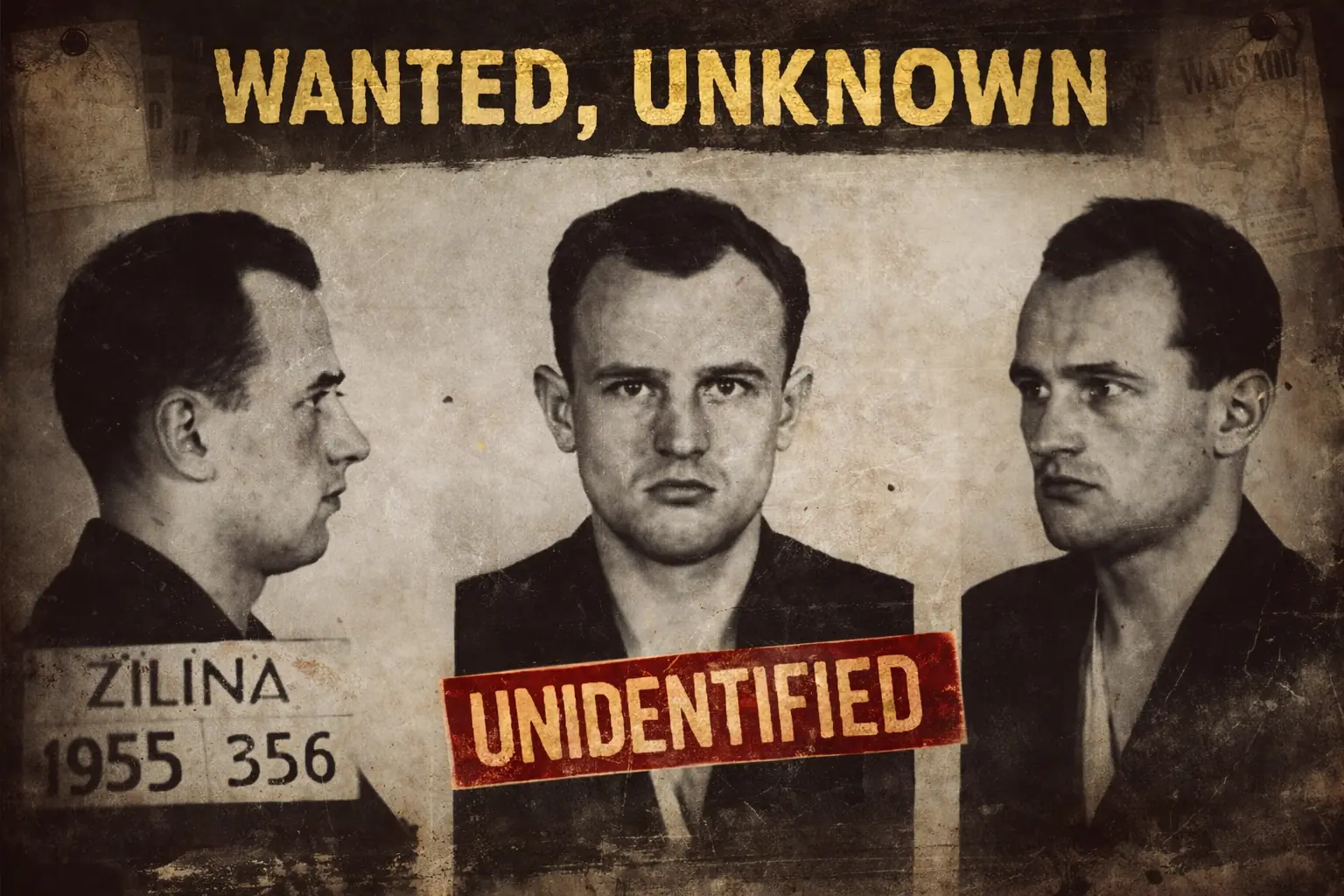
Cold War history is full of stories that sound like spy fiction. This one is different because it really happened, and even decades later it remains an unresolved Cold War mystery. The Karel Novák mystery began in the summer of 1955, when an unidentified man in Czechoslovakia appeared near the Czechoslovak Polish border with no papers, no verified past, and a story that kept changing depending on who was asking. Authorities labeled him Karel Novák, a name so ordinary it might as well have been John Smith. But the more the state tried to figure out who he was, the stranger the case became.
Table of Contents
Karel Novák Mystery Begins Near Oravská Polhora
On June 24, 1955, border guards near the village of Oravská Polhora in modern day Slovakia detained a man wandering close to the frontier. He looked to be in his twenties. He carried no identification and did not answer questions with speech. Instead, he relied on gestures and appeared to be both deaf and unable to speak.
In his bag were a few low value items, a knife, a razor, a napkin, and food that appeared to be of Polish origin. To the guards, the conclusion was straightforward. The unidentified man likely crossed illegally from Poland into Czechoslovakia.
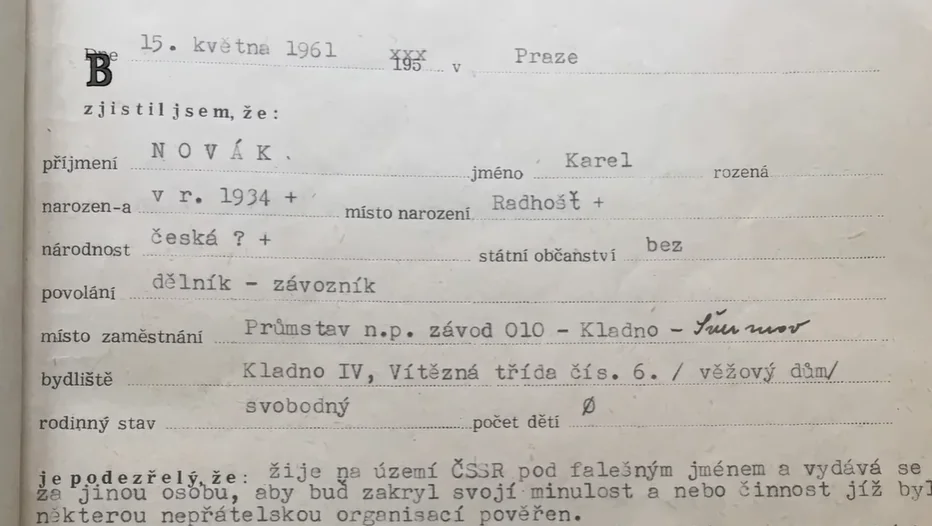
He was arrested and taken to Žilina for questioning. Because he either refused to talk or could not, the interrogation was conducted in writing. That is where the first version of his identity took shape. He claimed memory loss and said he could not recall large parts of his life. Still, he wrote down a name. Karel Novák. He stated he was born in 1934 in Radhošť in Czechoslovakia and that he had been deaf and unable to speak since birth.
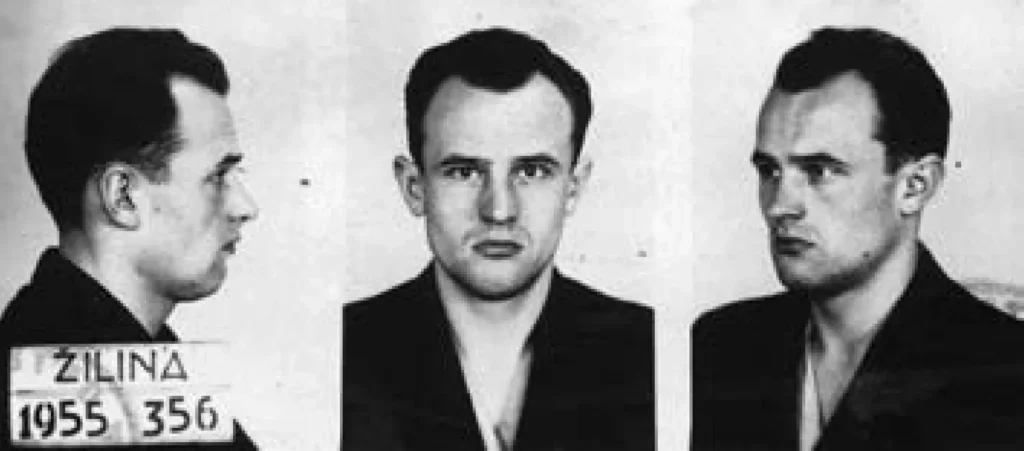
What followed was a patchwork biography. During the Nazi occupation, he said his family was transported to Germany, where he was separated from his parents. He claimed he was sent to a facility for the deaf in Graz in Austria and received only two years of basic schooling. After the war, he said he was deported back to Czechoslovakia. He then described years of drifting through the country, surviving on seasonal jobs, mushroom picking, and sleeping at the main station in Ostrava. In early 1955, he claimed he had been helping skiers in the mountains, got lost, and eventually ended up at the border.
An Unidentified Man With No Past and a Story Full of Holes
Investigators began checking details. Police found no birth record matching his claims. In Graz, no one recognized him, even though he provided specific names of doctors and staff. In Ostrava, there was no confirmation that such a man had been living at the station. His background did not add up.
He was transferred to Prague and held for roughly six months. Accounts describe repeated interrogations, beatings, and torture. Yet he did not abandon his narrative. At the same time, authorities searched for anyone who might recognize him, especially among postwar refugees who passed through camps in Germany and Austria.
This is where the case began to resemble a spy thriller. Several witnesses claimed they had seen a man resembling him in refugee camps between 1951 and 1954. One stated that the man spoke Czech with a foreign accent and worked as a translator for the CIA. Another claimed to have met him in Wels, Austria, and said he had burns or scars on his forearms, often covered by bandages. Investigators did find scars. The man explained them as injuries from gymnastics or physical training, and no cause was officially proven.
None of these testimonies were ever confirmed beyond doubt, but they were enough to keep the Czechoslovak secret police deeply interested.
Was Karel Novák Really Deaf and Unable to Speak
A central question remained. Was his disability real.
Authorities doubted him, yet some details were difficult to fake. He used sign language convincingly and, according to reports, did not react even when loud noises were made behind him. Medical examinations produced inconclusive results. Some experts suggested that faking such a condition to that degree would be nearly impossible. Others pointed to a contradiction. If he truly had been deaf since birth, how could he write with such sophistication and handle languages at a level far beyond what his claimed education could explain.
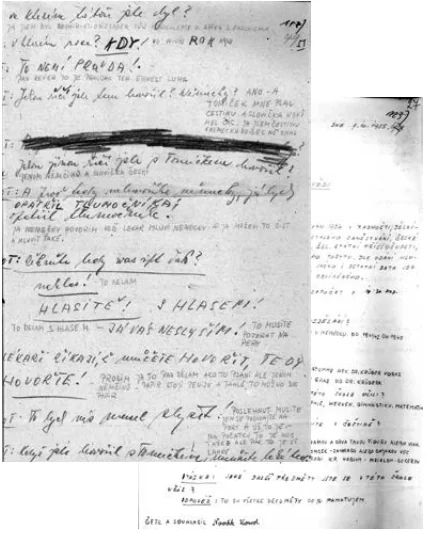
Psychiatric evaluation added more tension. One specialist reportedly concluded that the man was not only highly intelligent but also exceptionally educated, a profile that did not match the image of someone with only two years of schooling and years spent homeless. Despite the suspicions, he was released in December 1955 due to lack of evidence for a specific crime.
That release was not freedom. It marked the beginning of long term surveillance.
Surveillance by the Czechoslovak Secret Police and the StB
After his release, the Czechoslovak secret police, known as the StB, began monitoring him. Reports described him spending time with people on the margins of society. He worked various jobs, including construction. Some coworkers believed he was truly deaf, claiming he failed to notice dangers that a hearing person would have perceived.
He later met František Veis, a man who became one of the most important figures in the Karel Novák mystery. Veis was, in fact, an informant for the StB. The two grew close, and Veis quietly reported everything he learned.
In his notes, Veis described the unknown man as strikingly knowledgeable, with deep interests in philosophy, literature, history, politics, architecture, art, and economics. That alone seemed out of place for someone who had supposedly lived rough for years without formal schooling.
According to Veis’s reports, the man eventually confessed something dramatic. He could hear and speak. He had been pretending for a long time and was tired of keeping up the act. He was allegedly fluent in Czech, Slovak, German, English, Polish, and Russian, with basic knowledge of French and Italian.
Then came the claim that pushed the case into legend. He reportedly told Veis that he was the son of Otto von Habsburg, heir to the Austro Hungarian legacy. Other variations followed, involving Poland, Russia, Magnitogorsk, postwar relocations, and secret work in sensitive environments. None of these claims were ever proven.
Veis continued reporting on him until 1968, a sign of how long the state kept the case open.
A Cold War Mystery Grows Deeper
Not long after another interrogation, the man stopped presenting himself as deaf in public. He claimed his hearing returned after an accident involving a severe shock and head injury. He said he struggled with pronunciation at first but improved quickly. People around him noticed a strange accent that sounded Polish, eastern Slovak, or even Russian.
He sought Czechoslovak citizenship, reportedly to marry and live a normal life. At one point, he told a young woman he had spent time hiding in the woods during the war and had once dug himself out from beneath a pile of bodies. The story was horrifying, yet the entire case often carried the tone of an unidentified person Cold War narrative that never fully made sense.
Another contradiction soon appeared. He began publicly supporting the communist regime, demonstrated an unusually strong command of Marxist theory, and joined the Communist Party in 1957. He later entered the Czechoslovak military and reportedly excelled. He understood protocols, performed well in combat training, and stood out as one of the best shooters in his unit. Some accounts claimed he could even drive a tank.
Skills like that suggested prior military training, possibly elite training, yet he could not explain where it came from.
The StB watched closely. He showed intense interest in military buildings and equipment. He photographed tanks and other devices. Allegations also appeared that he mocked Soviet achievements, though with secret police records it is always difficult to separate observation from accusation. Either way, suspicion returned in full force.
Arrest, Espionage Accusations, and the Florian Grabowski Theory
In May 1961, he was arrested again and charged with espionage and conspiracy. At this point, he stopped using the name Karel Novák and claimed he did not know who he was. He denied the refugee camp testimonies and denied being a spy.
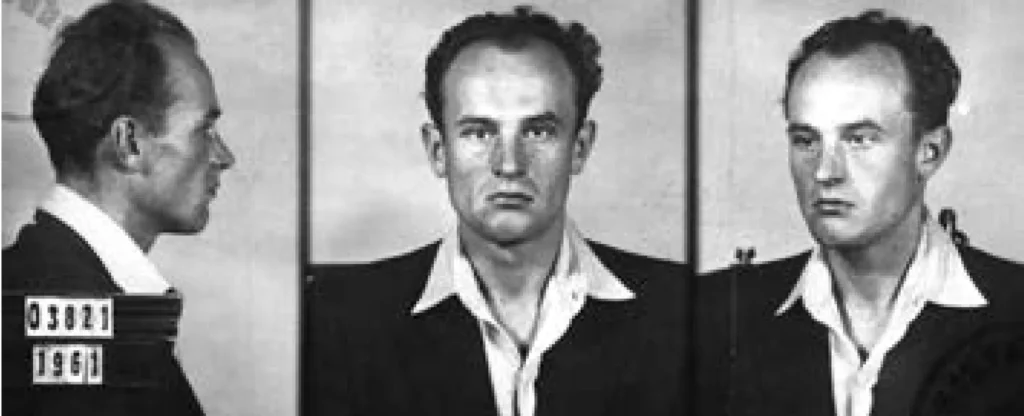
Further evaluations followed. An anthropological estimate placed his age between 27 and 35. Psychiatric reports described him as a psychological anomaly with psychopathic traits and above average intelligence, while rejecting the idea that he was insane.
A striking lead emerged from Poland. A woman from Kraków, Teofila Grabowska, and her daughters recognized his photograph as their missing son, Florian Grabowski. Florian had allegedly been arrested by the Nazis and deported to Auschwitz, where he was believed to have died. Yet when she met the man in person, she claimed he looked different and was not her son. He insisted he did not recognize her. The lead was dropped. Later speculation suggested she may have changed her story out of fear, but no proof ever surfaced.
In June 1962, he was sentenced to twelve years in prison. He was sent to a facility for political prisoners and forced to work in the glass industry. Multiple informants monitored him inside. Their descriptions were consistent. Quiet, guarded, and unexpectedly calm. He smoked, drank tea, read, played chess alone, and praised his own intelligence when he won.
Films, Surveillance, and the Death That Solved Nothing
He was conditionally released in 1969 and settled in Kladno near Prague. He worked as a bus driver and lived a low profile life, surprising authorities who feared he would flee to the West.
The StB continued monitoring him. In 1972, they helped fund and release a documentary hoping someone would recognize him. Later, a feature film portrayed him as a Western spy and ended with his death. Neither effort revealed his true identity.
During the 1970s, his mental state appeared to deteriorate. He became paranoid and believed he was constantly being watched. According to some accounts, he began claiming supernatural abilities such as reading minds or predicting the future. Despite this, he was generally described as calm and well behaved.
In 1979, he was questioned again over alleged anti regime conspiracy. His apartment was searched and prohibited books were reportedly found. Surveillance intensified once more. In 1981, the StB planned another interrogation.
It never happened.
He died on November 17, 1981 in his apartment. Toxicology reports found no poison, and the official cause of death was sudden cardiac arrest. Yet even his death raised questions. Investigators noted signs that someone may have searched the apartment before the StB arrived. Reports mentioned an unknown chemical substance on some belongings and a radio transmitter capable of reaching foreign signals. Nothing was conclusively tied to espionage.
Who Was Karel Novák The Unresolved Cold War Mystery
After 1989, the case was revisited without resolution. Decades later, in 2018, Czech journalist Jaroslav Mareš investigated again and uncovered a strange administrative detail. The address listed in official documents did not exist. Neighbors recalled that the man sometimes disappeared for long periods and no one knew where he went. When films about him appeared, he reportedly smiled and said they were about him.
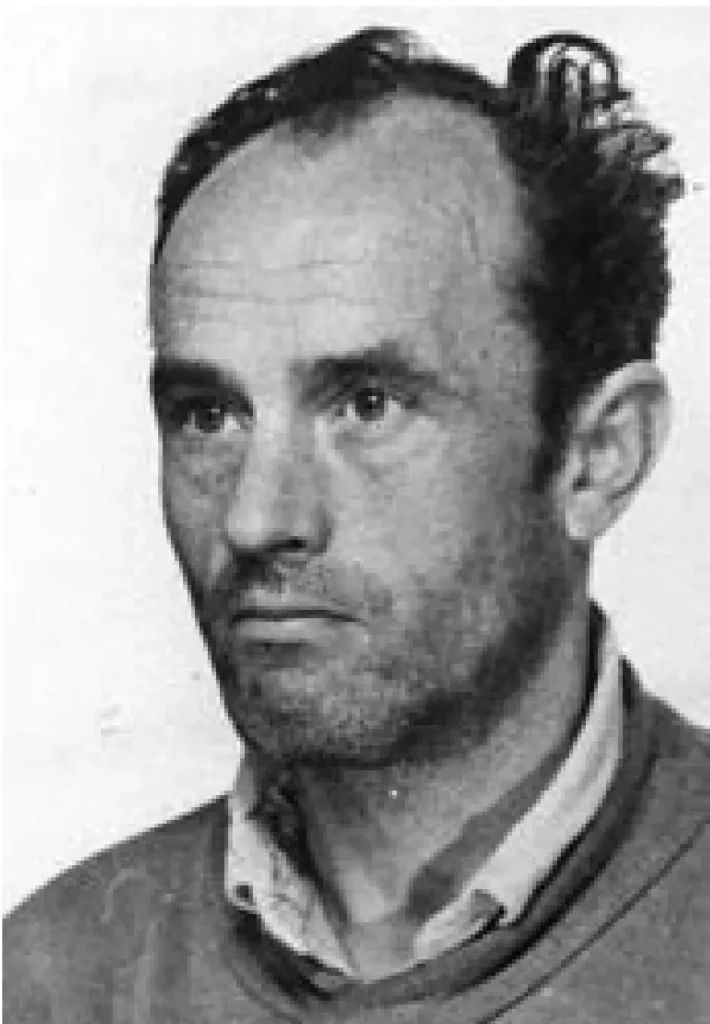
Strip away the rumors and certain facts remain. An unidentified man in Czechoslovakia appeared at the border. He convincingly acted as deaf and unable to speak. At the same time, he displayed intelligence and education that did not fit his supposed background. He had skills suggesting serious training. The Czechoslovak secret police followed him for nearly thirty years and never proved who he really was.
Was he a spy. Possibly. But if so, for whom, and why did he never flee. Was he a traumatized survivor who reinvented himself and guarded his secret to the end. Also possible.
What makes the Karel Novák mystery so haunting is that even if the truth was simple, it may now be impossible to confirm. What remains are fragments of a life, a face in old photographs, and the long shadow of a man who stepped out of the woods in 1955 and never fully stepped back into the light.
The question still stands. Who was Karel Novák, and what was he hiding.
The Karel Novák mystery is not the only case where a man vanished without a trace. A similarly unsettling story involves a missing man whose remains were found hidden behind a wall years later.
Sources: