Thomas Midgley Jr: 2 Inventions That Quietly Poisoned the World
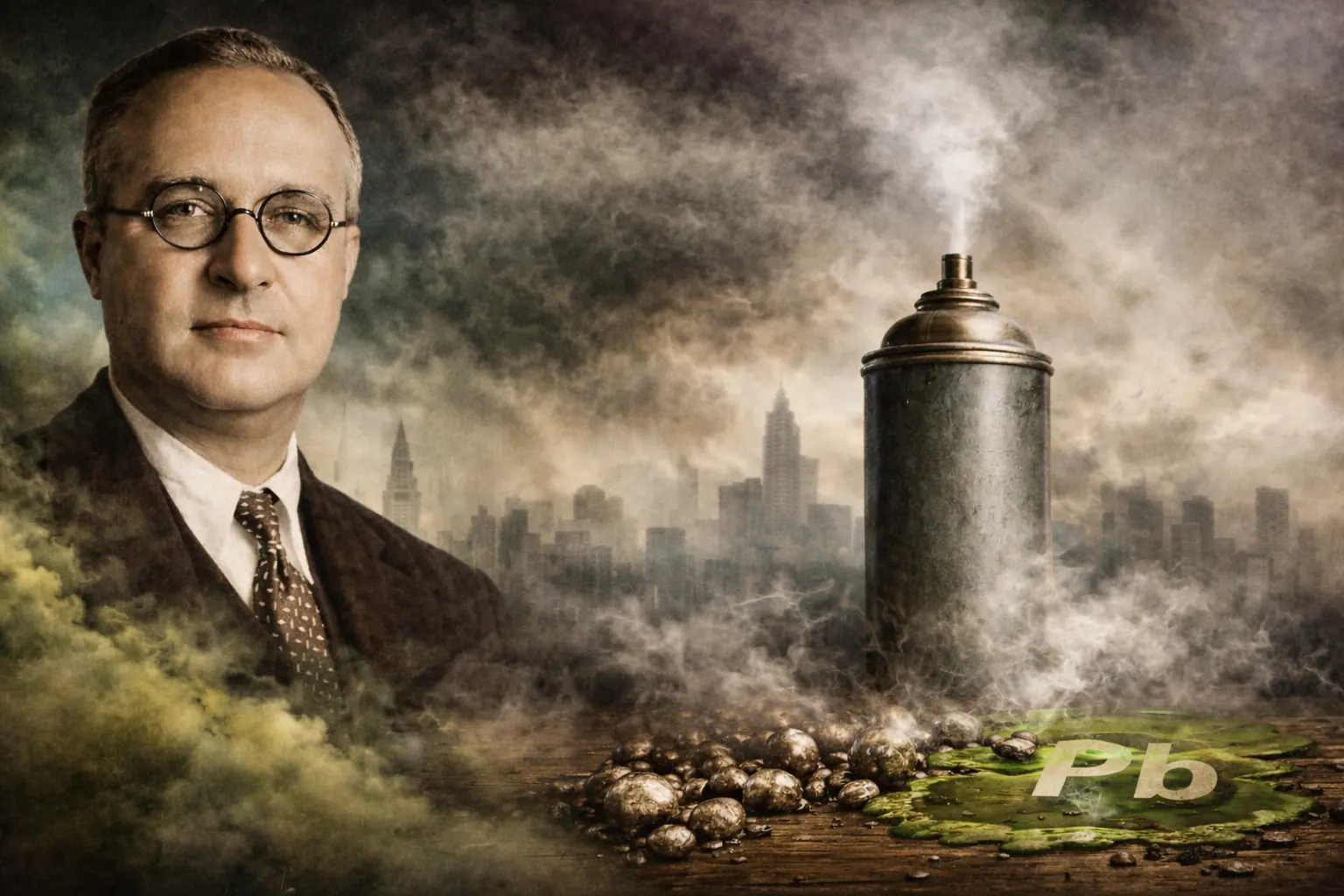
When we think of an inventor, most people imagine someone like Albert Einstein, Isaac Newton, or someone who pushes civilization forward. A person who brings solutions, makes life easier, and helps build a better future. The story of Thomas Midgley Jr. is a warning that even good intentions can lead to devastating consequences. Midgley was a brilliant chemist, a hardworking engineer, and at the same time the inventor of two technologies that arguably caused some of the greatest global environmental and health problems affecting not only humans, but the entire planet. Leaded gasoline and freon were not small mistakes in the history of science. They were silent catastrophes whose consequences we still feel today.
In this article, I want to share a story about a man almost no one knows, yet whose inventions affected every single one of us. A story that shows how easily good intentions can turn into a global problem when we stop asking about consequences and focus only on profit.
Table of Contents
A World That Wanted More Power and More Comfort
The early twentieth century was a time of rapid technological growth. Cities expanded, and the automobile stopped being a luxury and became a symbol of freedom. But engines had a serious problem. At higher speeds, uncontrolled explosions occurred inside the cylinders. Engines knocked, lost power, and wore out quickly. The industry needed a solution and was willing to pay almost anything for it.
Midgley worked in automotive research laboratories, and his task was clear. Find a fuel additive that would eliminate engine knocking. Dozens of substances were tested. Alcohols. Ethers. Various mixtures. Many of them worked, but they had one major disadvantage. They were difficult to patent and did not promise massive profits. Eventually, after years of experiments, Thomas Midgley Jr. found what he was looking for. That substance was lead.
Leaded Gasoline as a Technological Miracle
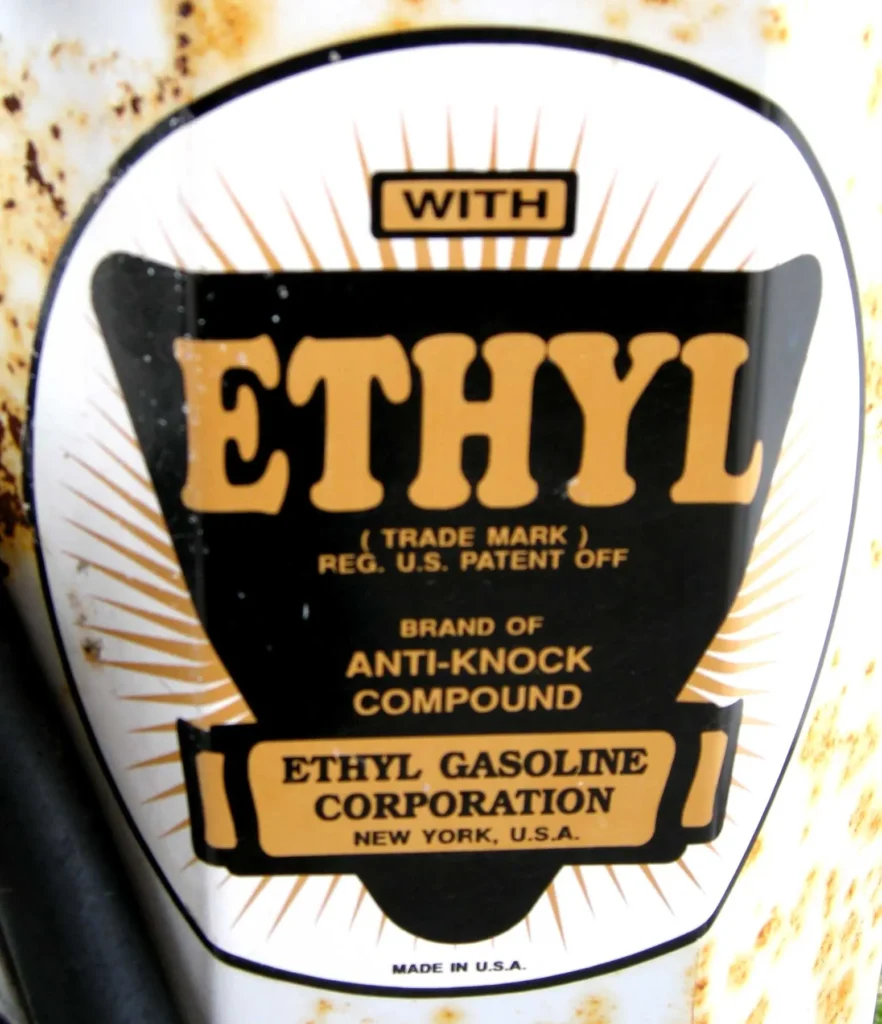
Tetraethyl lead turned out to be an ideal additive. Only a small amount was needed, and the engine ran smoothly, quietly, and efficiently. Midgley was thrilled. The industry even more so. Gasoline became better, cars more reliable, and everyone believed the problem that had plagued automakers was finally solved.But it was solved only from a technical perspective.
Lead is toxic. Humanity has known this for centuries. People avoided lead even in ancient times. The Romans knew it caused illness, confusion, and death. Chemists and doctors in the twentieth century knew this as well. Midgley and his colleagues claimed that in low concentrations it was safe. They even staged public demonstrations, washing their hands in lead solutions and inhaling lead vapors to convince the public that it was harmless.
Reality was very different. During these demonstrations, Midgley poisoned himself and later spent several months recovering. The exposure caused lasting health damage. The public, however, never knew.
The Silent Poisoning of an Entire Planet
When leaded gasoline began to be used on a massive scale, no one measured its long term effects. Exhaust fumes released microscopic lead particles into the air. These particles settled into soil, water, food, and human bodies.
Lead does not simply disappear. It accumulates in bones, organs, and especially the brain. In children, it causes reduced intelligence, behavioral disorders, aggression, and learning difficulties. In adults, it contributes to heart disease, kidney failure, and neurological damage.
Today we know that nearly everyone living in cities during the mid twentieth century had elevated levels of lead in their bodies. Estimates point to millions of premature deaths and entire generations of children whose brains were quietly damaged before they were even born. All of this happened for smoother engine performance and higher profits.
Science Warned While Industry Stayed Silent
It is important to say that this was not a case of complete ignorance. Doctors in refineries documented worker poisonings. Cases of hallucinations, psychosis, and deaths appeared. Some factories were even nicknamed houses of madness.
Instead of banning leaded fuel, denial followed. Studies warning about the dangers were questioned. Research funding shifted into the hands of industry. Safety became a business issue rather than a public health concern. Midgley himself argued that his responsibility was to solve a technical problem, not to deal with social consequences. This mindset became a defining symbol of the era.
Freon and the Illusion of Safe Cooling
If leaded gasoline had been Midgley’s only mistake, history might remember him differently. But his second major invention proved to be just as catastrophic.
Early refrigeration was dangerous. Older refrigerants were toxic, flammable, and explosive. A gas leak could kill an entire family. Once again, Midgley received a task. Find a substance that would be stable, non toxic, and safe.That substance became freon.
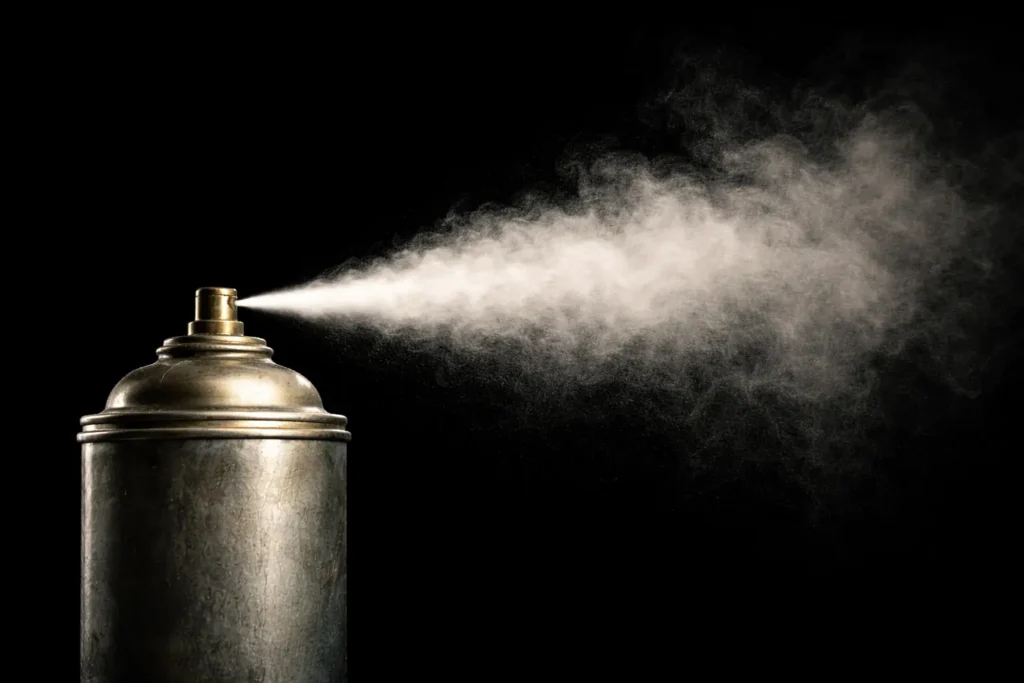
At first glance, it seemed perfect. Odorless. Non flammable. Harmless to humans. It was used in refrigerators, air conditioners, and spray cans. Midgley publicly demonstrated its safety by inhaling it and blowing out a candle. At the time, no one imagined what would happen decades later.
A Hole in the Sky
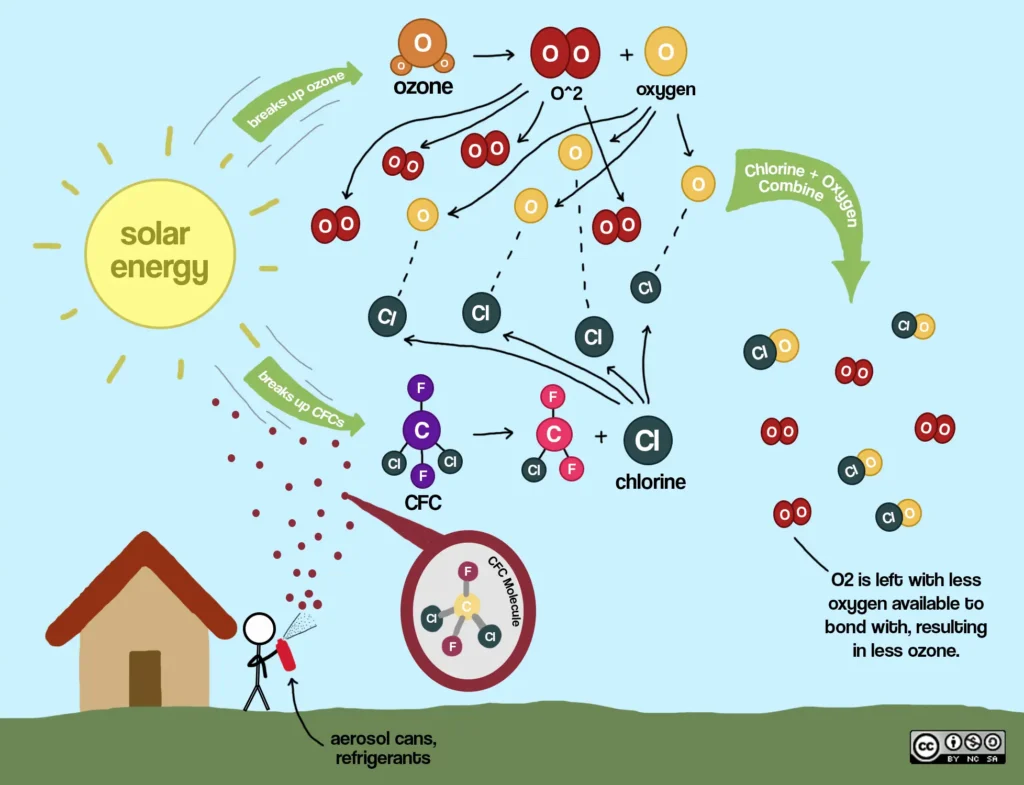
Freons are chemically extremely stable. That stability made them ideal. But the same property allowed them to slowly rise into the upper atmosphere after being released. There, under ultraviolet radiation, they broke down and released chlorine atoms that destroyed ozone.
The ozone layer protects life from harmful ultraviolet radiation. Its depletion leads to higher rates of skin cancer, eye damage, weakened immune systems, and severe ecosystem disruption.
By the time scientists discovered the ozone hole in the second half of the twentieth century, it was already too late. Freons were spread across the entire planet. It took decades to restrict their use and more decades for the ozone layer to begin slowly recovering.
How Much Damage Can One Person Cause
The question of responsibility is complex. Was Thomas Midgley Jr. alone responsible for the environmental and health damage? Or were company owners who profited from his inventions equally guilty? Or were we all part of the problem?
Midgley did not want to destroy the world. He worked in a system that rewarded innovation and ignored consequences. Still, the fact remains that his inventions contributed to some of the greatest environmental and health disasters in human history.
Leaded gasoline affected the mental development of hundreds of millions of children. It increased crime rates, lowered average population IQ, and caused countless health problems. Freon weakened the planet’s protective shield, increasing skin cancer rates and eye diseases worldwide. Some historians argue that no other individual has unintentionally caused so much global harm.
A Tragic Ending and the Symbolism of Fate
You might ask how Midgley’s life ended. Ironically, his death reflected his story. After years of health problems, many of them linked to his own experiments and public demonstrations of safety, he designed a mechanical device to help him move in bed. The mechanism failed, and Midgley strangled himself in it.
It is a tragic detail, but many see it as symbolic. A man trapped by his own inventions. Technology meant to help became the device that ended his life.
The story of Thomas Midgley Jr. is not just a historical curiosity. It is deeply relevant today. We continue to develop new technologies, chemicals, and systems whose long term consequences we do not fully understand. We still ask whether something is technically possible and economically profitable, but too often forget to ask whether it is safe or ethical.
Midgley teaches us that scientific responsibility does not end in the laboratory. That technological progress without a moral compass can lead to silent disasters. And that some damage only becomes visible when it is already irreversible.
What This Story Means Today
Thomas Midgley Jr. was both a genius and a warning. A man who helped engines run smoother and made life more comfortable, while quietly poisoning the world and damaging the planet’s protective shield. His story forces us to think about what we consider progress today and what price we are willing to pay for comfort.
Perhaps one day historians will write about our era in a similar way. And they will ask whether we learned from Midgley’s story, or simply repeated the same mistake in a more modern form.
If this story interested you and you would like to read about another inventor who remains largely unknown, yet whose work allows millions of people to see clearly every day, you can read more here
Souces: