Dancing in the Wards: The TB Drug That Accidentally Launched the Antidepressant Era
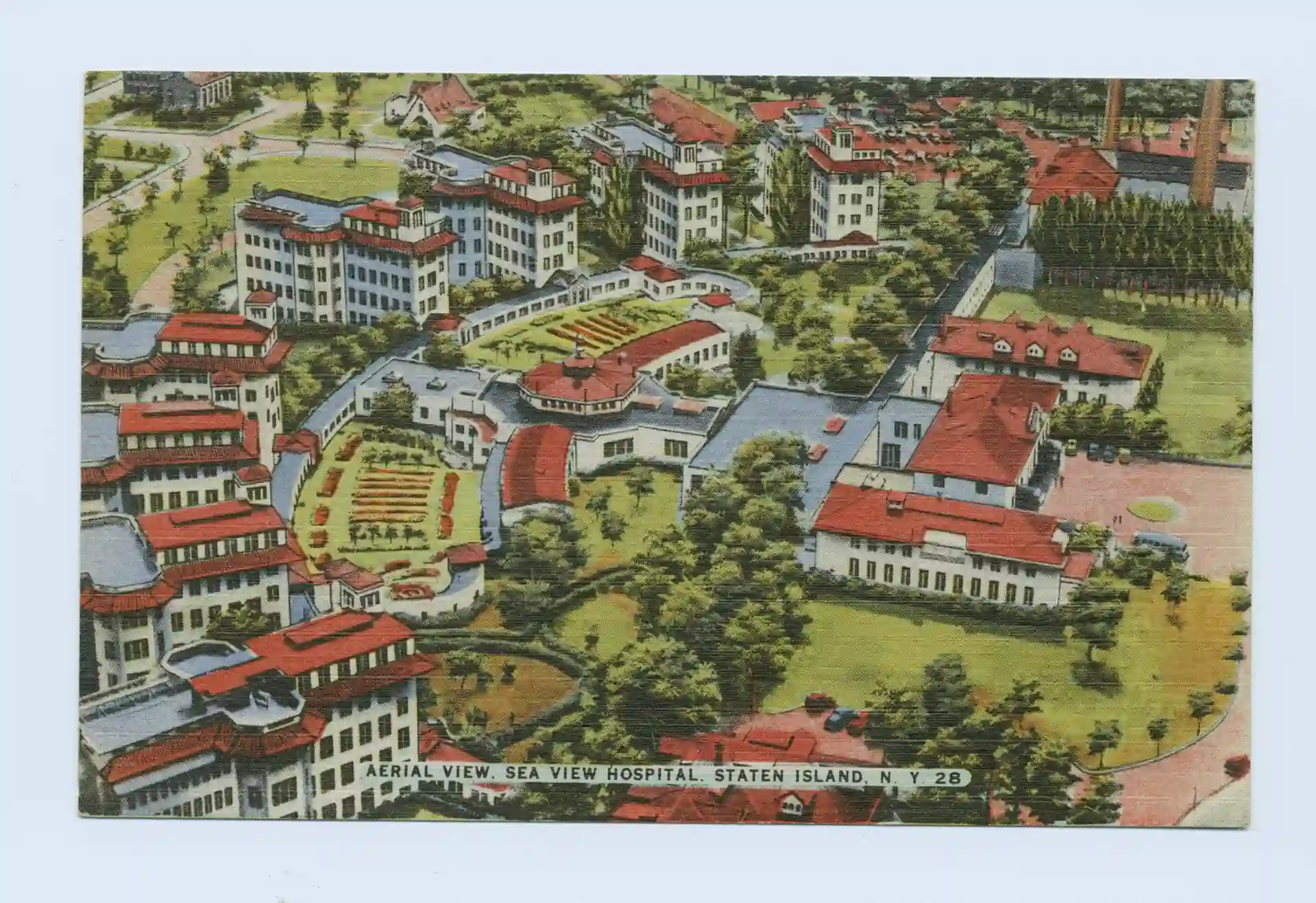
In early 1952, a tuberculosis hospital on Staten Island became front-page news. At Sea View Hospital, patients so wasted that TIME magazine described many of them as “living skeletons” were suddenly ravenous, gaining weight and getting out of bed. TIME also reported that patients who had taken two experimental drugs “danced in the wards, to the delight of news photographers.” One of those drugs, iproniazid, is now often called the first antidepressant.
That’s usually where the retelling stops: a TB drug made dying patients so happy they danced, and psychiatry took notice. The fuller story has a rocket-fuel myth, a fight over credit and a liver problem that sank the drug within a decade.
Table of Contents
A Last Resort on Staten Island
When Sea View opened in 1913, tuberculosis was a leading cause of death in New York City. With 1,402 beds and open-air pavilions, it was one of the largest TB hospitals in the country, according to the Staten Island Museum. From the early 1930s, Black nurses filled many of the jobs white nurses had left; they are remembered today as Sea View’s “Black Angels.”
In June 1951, Sea View physicians Edward Robitzek and Irving Selikoff began giving volunteers a new pill from Hoffmann-La Roche’s laboratories in Nutley, New Jersey. The volunteers had advanced tuberculosis in both lungs, and nothing else had worked. The drug was isoniazid, which Roche called Rimifon. Its chemical cousin iproniazid, branded Marsilid and synthesized by Roche chemist Herbert Fox in 1951, went into the trials too. The nurses gave the doses and reported what they saw.
Eleven Eggs for Breakfast
The results, TIME wrote, were “obvious to the eye.” Of the first 92 patients, 44 had fevers, and all 44 returned to normal temperature within two weeks. Patients who had barely touched their meals now asked for third and fourth bowls of cereal. For many, breakfast went from one egg to five, and one elderly man reached eleven. Some put on as much as 50 pounds in three months.
Then the story escaped the hospital. The New York Post gave most of its front page to the headline WONDER DRUG FIGHTS TB, and The New York Times put the news at the top of Page One. “Never in the agelong history of tuberculosis,” TIME began, “had there been such excitement about a new treatment.”
What the Press Got Right, and What It Blurred
The headlines got the big thing right: the drugs worked against TB. Isoniazid opened a new era in treatment and is still used today. In 1955, Robitzek, Selikoff and two doctors who ran a parallel trial at New York Hospital shared a Lasker Award for the work.
The mood change was real, too. In a 1955 paper in Britain’s Journal of Mental Science, A. J. Oldham wrote that the Sea View team had “noted the development of a state of euphoria” in their patients. Historians of psychopharmacology describe “euphoria and overactive behavior in some patients” taking iproniazid.
To the doctors, though, that lift was a side effect. The Sea View team published a separate report on the drugs’ toxicity, and iproniazid caused enough trouble, from dizziness and constipation to nerve inflammation, that it was soon “retired from widespread use” against TB, as TIME later put it. Isoniazid took over.
The dancing is where legend crept in. TIME’s 1952 story credited “the drugs,” plural. By 1957, the magazine credited iproniazid alone: its patients “became happy, ate ravenously, gained weight and started dancing in the wards.” The most-quoted line, about patients “dancing in the halls tho’ there were holes in their lungs,” is attributed in modern retellings to newspaper reports, to a doctor or to a hospital orderly. And even then, as psychiatrist Wallace Mendelson notes, it was unclear whether the brighter mood came from the drug or from better nutrition.
The Rocket-Fuel Myth
Many retellings add one more detail: the drugs were supposedly made from leftover Nazi V-2 rocket fuel. Both compounds are indeed hydrazine derivatives, and several histories say surplus hydrazine was sold off cheaply after World War II. But the V-2 didn’t run on hydrazine. Its engine burned alcohol and liquid oxygen, according to the Smithsonian’s National Air and Space Museum. Hydrazine hydrate did fly in wartime Germany, as part of the fuel for the Me 163 Komet rocket fighter.

From Side Effect to “Psychic Energizer”
Without a few lucky breaks, the mood effect might have stayed a footnote. In 1952, a team at Northwestern University found that iproniazid blocks monoamine oxidase, or MAO, an enzyme that breaks down brain messengers such as serotonin and norepinephrine. In 1956, Roche researcher Alfred Pletscher showed that iproniazid raised serotonin levels in animal brains, the opposite of reserpine, a blood pressure drug that left some patients depressed.
That spring, Nathan S. Kline, research director at New York’s Rockland State Hospital, watched an experiment at a drug company lab: animals given iproniazid before reserpine became hyperactive instead of sedated. The next month, Roche’s medical director, already hunting for an antidepressant, came to see him. Kline hired a scientist named John Saunders, and in November 1956 the team began giving iproniazid to 17 Rockland patients diagnosed with dementia praecox, an old term for schizophrenia. Kline and two colleagues also tried it on depressed patients in private practice.
In April 1957, the group reported its findings to an American Psychiatric Association regional meeting in Syracuse, New York. TIME’s account was glowing: of 14 patients whose depression had no physical cause, 12 improved, including a woman who had been hospitalized for 26 years. Kline called the drug not a tranquilizer but a “psychic energizer.”
The fine print was less dramatic. The hospital group was made up of long-stay schizophrenia patients, not textbook depression. Kline’s 1964 Lasker Award citation says they became “more alert, responsive and sociable,” while “more typical depressions” in his private practice responded even more dramatically. Another psychiatrist, George Crane, reported similar findings that year.
Because iproniazid was already on the market as a TB drug, doctors could prescribe it immediately. Within about a year, roughly 400,000 patients had received it, according to FDA records cited by psychopharmacology historian Barry Blackwell.
So Was Iproniazid Really the First Antidepressant?
Partly. Iproniazid was the first antidepressant of the MAO-inhibitor type, but it had company. In Switzerland, psychiatrist Roland Kuhn published his results with imipramine on August 31, 1957, presented them in Zurich two days later and saw the drug released there as Tofranil by the end of the year. Historian Thomas Ban calls the two drugs the prototypes of the major antidepressant classes.
Isoniazid muddies things further. In 1952 and 1953, psychiatrists in France and the United States reported that the TB drug seemed to help some depressed patients, even though, as Ban notes, isoniazid doesn’t block MAO. When Oldham tested it in a study published in 1955, he saw too little effect to pursue a larger trial.
So “first” depends on what you count. The safest claim: iproniazid was one of the first two antidepressants, and the first of the MAO-inhibitor family.

The Liver Problem That Sank It
The boom was short. By 1959 and 1960, medical journals were reporting jaundice, a sign of liver damage, in patients taking iproniazid, and the drug was withdrawn from the U.S. market in 1961. Safer successors such as phenelzine and tranylcypromine took its place, but MAO inhibitors brought a hazard of their own: the “cheese reaction,” a dangerous spike in blood pressure triggered by tyramine-rich foods. They are still prescribed, though often only for patients who haven’t responded to other treatments.
Iproniazid joined a long line of miracle chemicals whose costs showed up later, like Thomas Midgley Jr.’s leaded gasoline and Freon. Yet it never disappeared completely. France’s official medicines database still lists Marsilid tablets with a valid authorization for major depression, though the French drug guide Vidal shows them as out of stock.
Credit, a Lawsuit and a Lasting Legacy
In 1964, Kline won his second Lasker Award, “for the introduction and use of iproniazid in the treatment of severe depressions.” The citation traced his work back to “the euphoric effect of iproniazid first reported in the treatment of tuberculosis” and noted that over four million patients a year in the United States were by then being treated with antidepressant drugs.
The honor came with a fight. Saunders believed he deserved a share, and the priority dispute went to court. Blackwell writes that the case ended in favor of the colleague, and that Kline had to share the award. Even the science stayed shaky. Ban argues that the link between iproniazid’s mood effect and MAO blocking was “tenuous,” and that researchers too easily confused how a drug acts with what causes an illness.
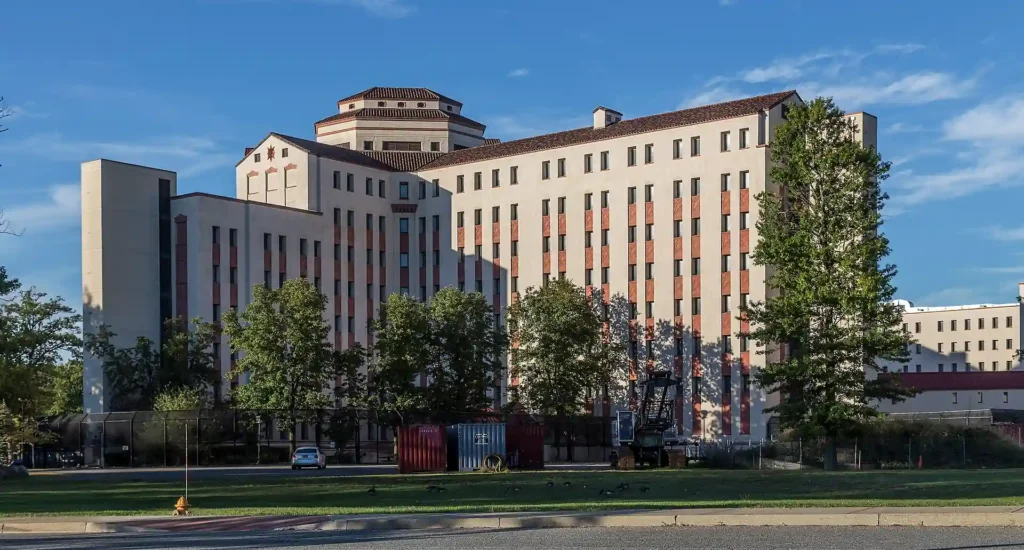
Sea View’s last TB patient left about a decade after the trials began; the campus is now a nursing home and rehabilitation center. Isoniazid still treats tuberculosis. And the old photos of patients celebrating in the wards still circulate. Nobody can say how much of that joy came from a molecule and how much from the shock of no longer dying.
This article is about medical history and is not medical advice. If you have questions about depression or its treatment, talk with a doctor or another qualified health professional.
Sources:
- Medicine: TB—and Hope (March 3, 1952)
- Medicine: Psychic Energizer (April 15, 1957)
- The Essential Work of Sea View Hospital
- Searching for a Cure: The “Black Angels” Nurses of Sea View Hospital
- The Effect of Isoniazid on Depressive States (1955)
- The Birth of Neuropsychopharmacology
- Pharmacotherapy of Depression: A Historical Analysis
- Nathan Kline and the Monoamine Oxidase Inhibitors
- Iproniazid for the Treatment of Severe Depression (1964)
- Where Do Antidepressants Come From? Part 1: MAO Inhibitors
Featured Image Soruce: Aerial view of Sea View Hospital on Staten Island, from an undated postcard. Image via The New York Public Library, public domain.