Centralia Underground Fire: The Town That Has Been Burning Beneath the Ground for Over 60 Years
This Centralia underground fire is one of the longest burning mine fires in history. In winter, the streets of small towns in Pennsylvania are usually covered with snow. In Centralia, however, this has not been true for decades. Snow melts here almost instantly. Not because of mild weather, but because a fire is burning beneath the surface of the town, a fire that cannot be extinguished. A fire that has outlived entire generations of residents and will likely continue burning for centuries. Today, Centralia is one of the most disturbing examples of a silent disaster in modern United States history, because it has practically disappeared from the map.
Table of Contents
Coal and the Centralia Underground Fire
Centralia was founded in 1866 in the heart of Pennsylvania’s coal region. It lies above some of the largest anthracite coal deposits in the world. It was coal that attracted the first settlers, created jobs, and kept the town alive for decades.
During the nineteenth century and the early twentieth century, Centralia was a prosperous mining town. Its streets were filled with houses, shops, churches, and schools. More than a thousand people lived there. Everything changed in the second half of the twentieth century, when demand for coal began to decline and many mines were abandoned.
1962 and the Start of the Centralia Mine Fire
In the spring of 1962, a fire broke out near the town. According to the most widely accepted theory, it started when trash was burned at a landfill close to an old mine entrance. The fire reached an unknown coal vein and ignited it.
Because coal does not burn like wood but burns slowly, and because it can continue burning for decades as long as it has fuel and access to oxygen, no one initially realized what the consequences would be. The fire was not visible. There were no flames. No explosions could be heard. The underground fire slowly spread beneath the town, using old mine tunnels and access to oxygen from abandoned shafts.
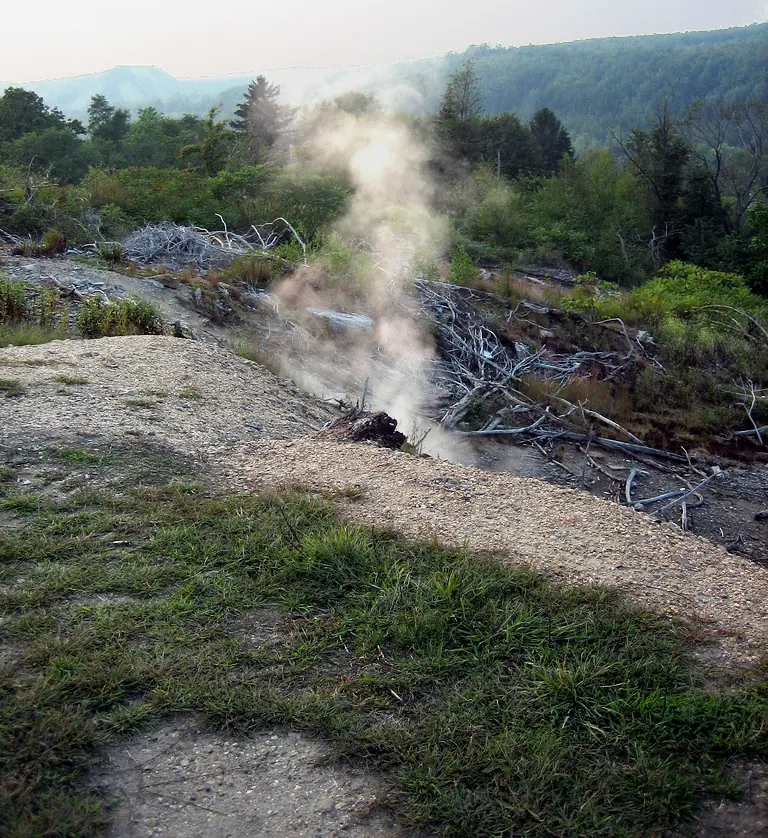
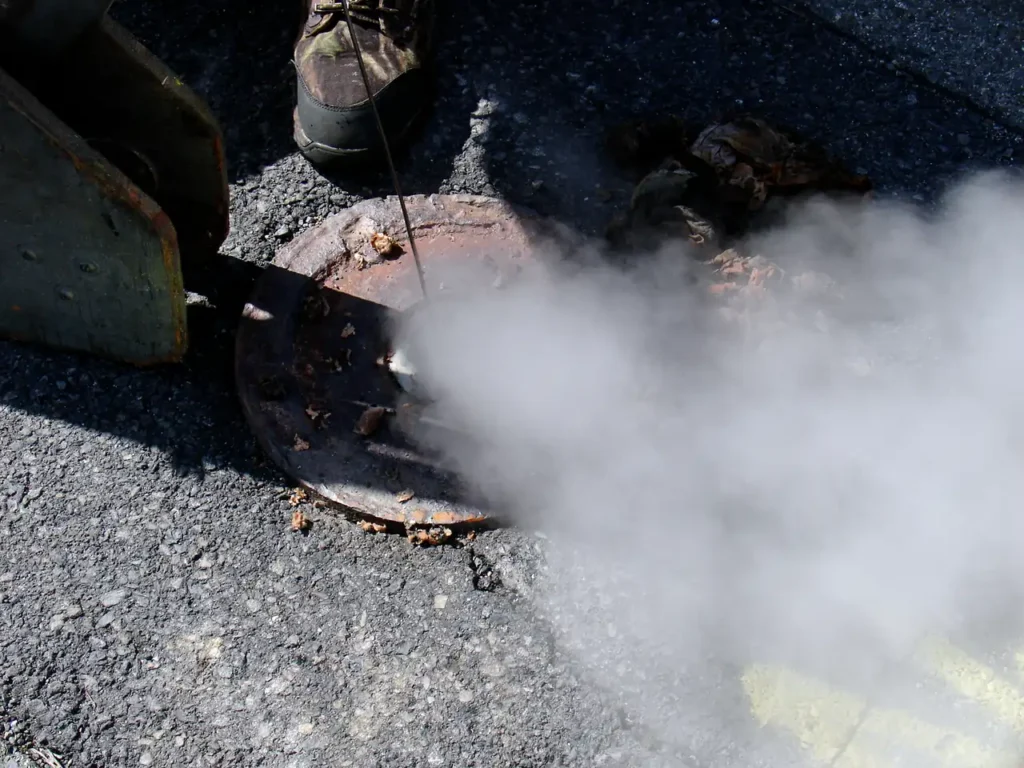
In the early years, the underground fire appeared more like a curiosity than a threat. Some residents noticed that snow on sidewalks melted faster than elsewhere. In certain areas, the ground felt warmer. Steam rose from some locations.
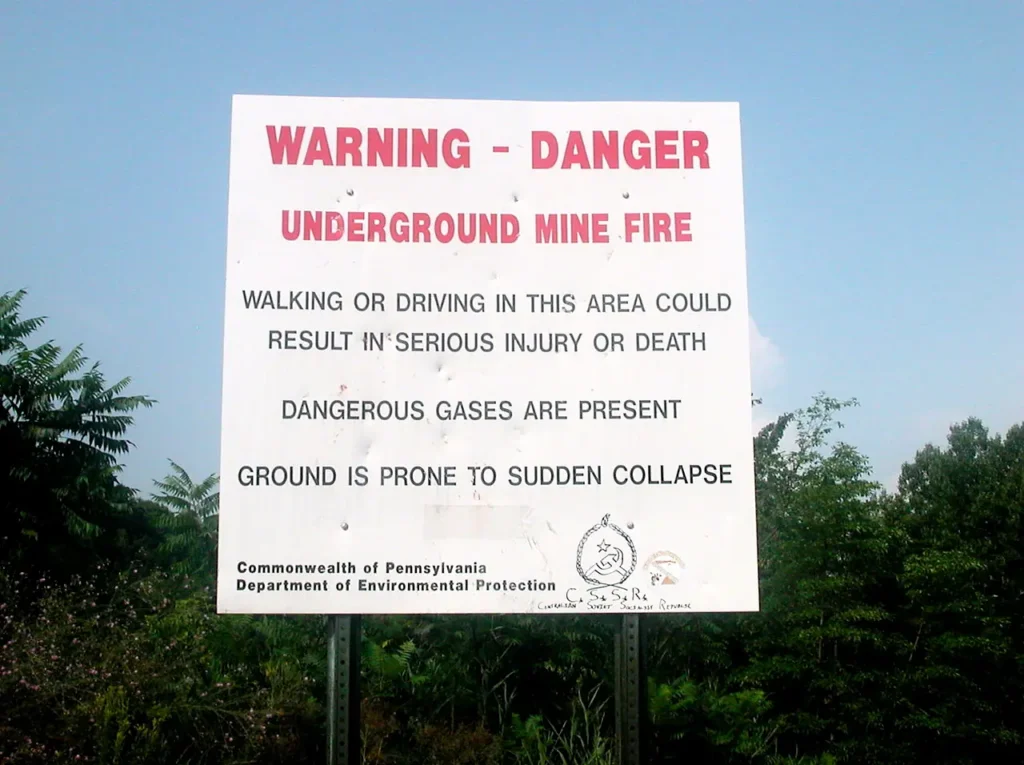
Gradually, much more dangerous effects appeared. Toxic gases began entering homes. Carbon monoxide and sulfurous fumes accumulated in low lying areas. Several residents nearly suffocated inside their own houses. At the same time, the ground beneath the town began to collapse, and roads and houses started to crack, because old tunnels were losing their stability.
Failed Rescue Attempts
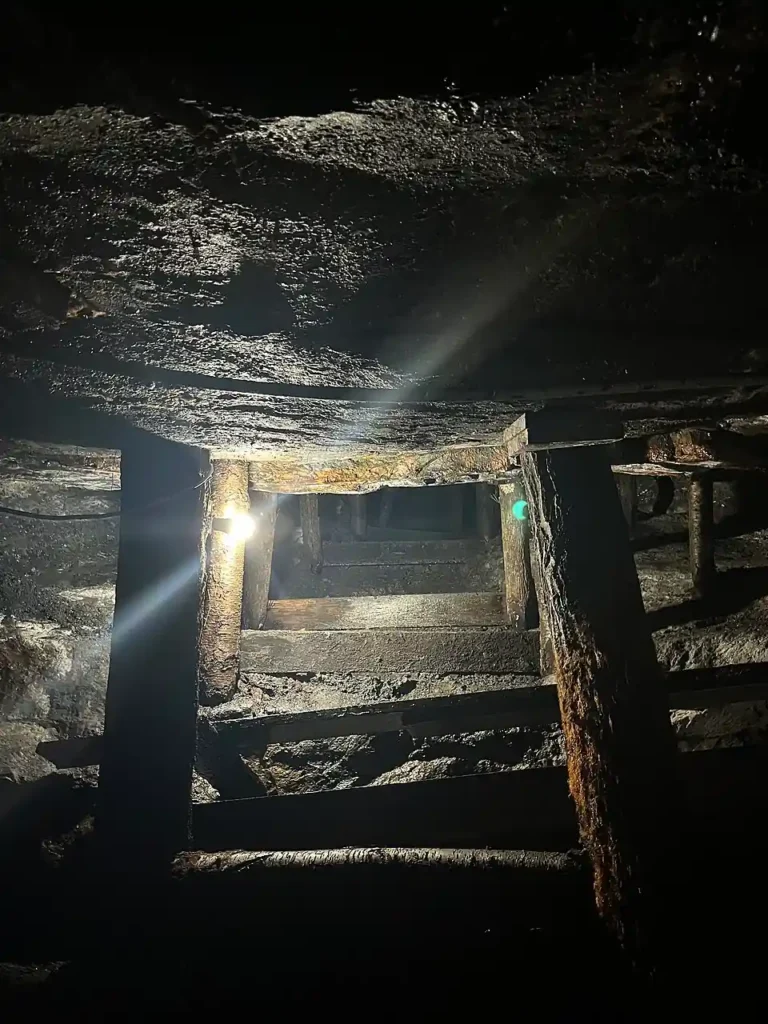
After these events, authorities made several attempts to stop the underground coal fire in Centralia, Pennsylvania. They drilled holes into the ground and pumped wet sand into them in an effort to cut off the supply of oxygen. In other places, they tried to regulate the airflow inside the tunnels.
Unfortunately, all efforts failed. The underground fire continued to spread. Today, it is estimated that it has affected an area of more than six square miles and reaches depths of up to three hundred feet in some places. It advances at a rate of approximately twenty meters per year and may continue burning for another two to three hundred years.
A Town Condemned to Disappear
In 1992, the state of Pennsylvania decided to condemn the entire town. Residents were offered buyouts and relocation. Many agreed and left. Eventually, the state used eminent domain. Homes were taken, addresses were removed, and Centralia’s ZIP code was revoked. Officially, the town ceased to exist. Some residents, however, refused to leave and continued living there for several more years.
Today, almost nothing remains in Centralia, an abandoned town in Pennsylvania shaped by an underground fire still burning beneath the ground. Most houses have been demolished. All that remains is an empty grid of streets, a few isolated buildings, and cemeteries that outlived the town itself. Gases continue to escape from the ground. In some places, the earth feels warm. Red metal pipes protrude from the soil. These are monitoring vents that track gas movement and underground temperatures.
Many drivers pass along Routes 61 and 42 without realizing they are driving through a former town. Centralia still appears on maps and still has road signs. It is a ghost town created by a town burning underground.
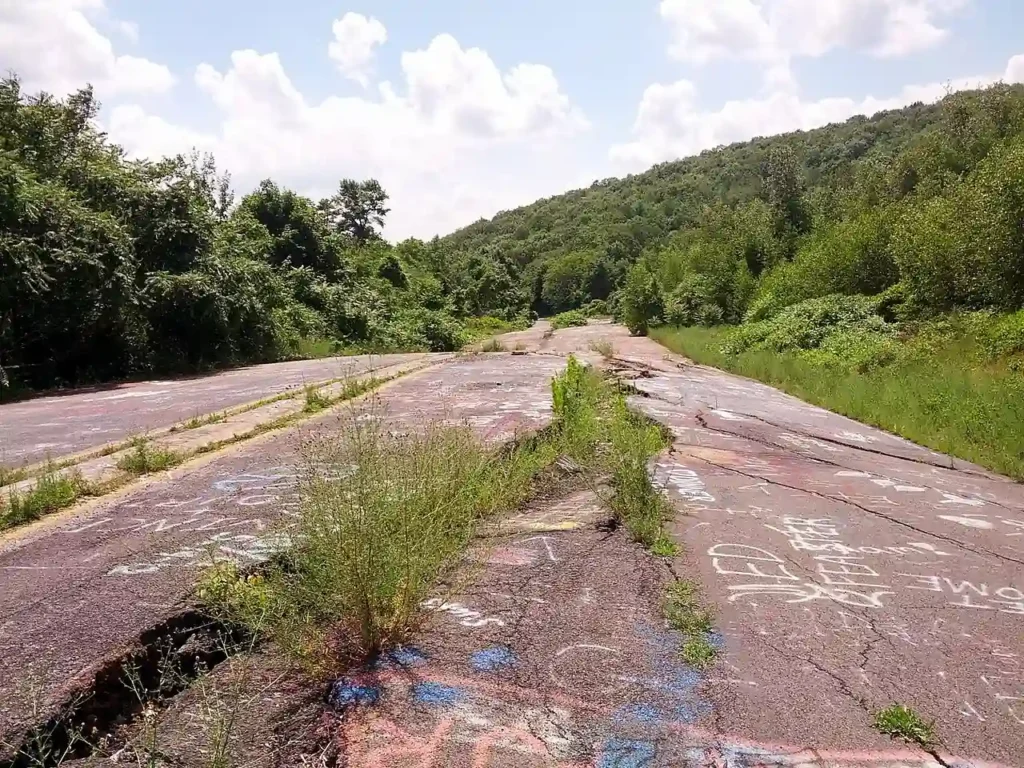
Visiting is not officially recommended. However, public roads remain accessible. People can walk or drive through the area. Due to unstable ground that poses a risk of collapse and continuously escaping toxic gases, caution is necessary. One of the most well known places was once the abandoned section of old Route 61. Cracked asphalt covered in graffiti became an iconic symbol of the town. In 2020, however, local residents and authorities covered the road with dirt to limit the number of visitors.
If you’re curious about another lesser-known story, you can also read about Otto Wichterle and his invention
Soucers: