Voyager 1 Is About to Be One Light-Day From Earth, Just a Month After It Went Silent
On Sunday, Oct. 18, NASA’s Deep Space Network listened for Voyager 1 at a scheduled time and heard nothing. Twenty-four hours later, the giant antennas tried again. Still nothing.
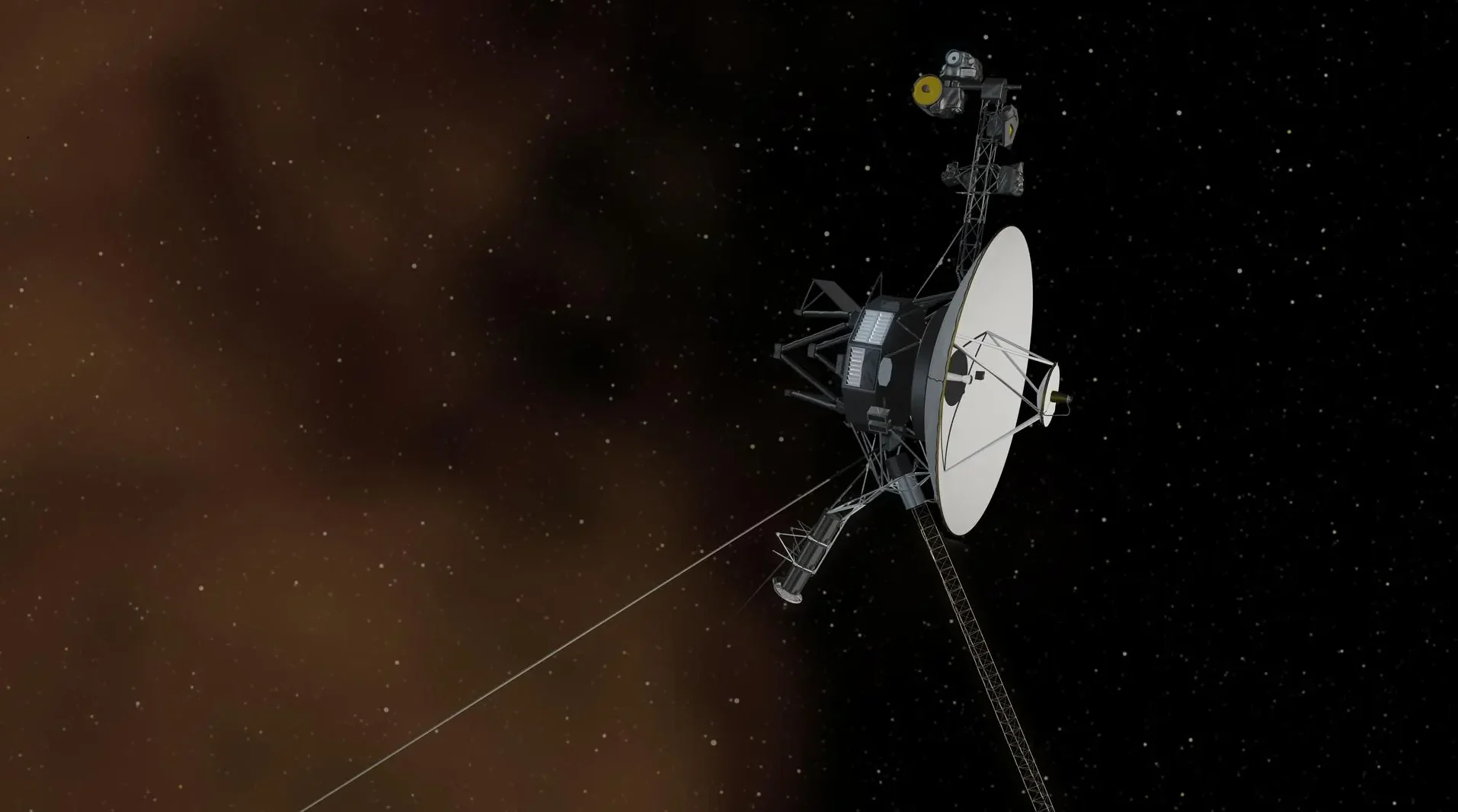
For two days, the most distant object humans have ever built seemed to have dropped off the air. Launched in 1977 and now about 16 billion miles from Earth, the spacecraft suddenly went silent. Then, on Oct. 20, its signal came back. The problem had resolved itself before engineers sent a single troubleshooting command.
The scare came one month before a milestone no machine has ever reached. At 5:16 a.m. EST (2:16 a.m. PST) on Wednesday, Nov. 18, NASA expects Voyager 1 to be one light-day from Earth: so far away that its radio signals, crossing space at the speed of light, need a full 24 hours to arrive.
Getting this far has taken constant work. A team at NASA’s Jet Propulsion Laboratory (JPL), near Los Angeles, has spent years rationing a shrinking power supply and reviving hardware that had been written off as dead. Each exchange with the spacecraft already takes nearly two days.
Table of Contents
Two Days of Silence
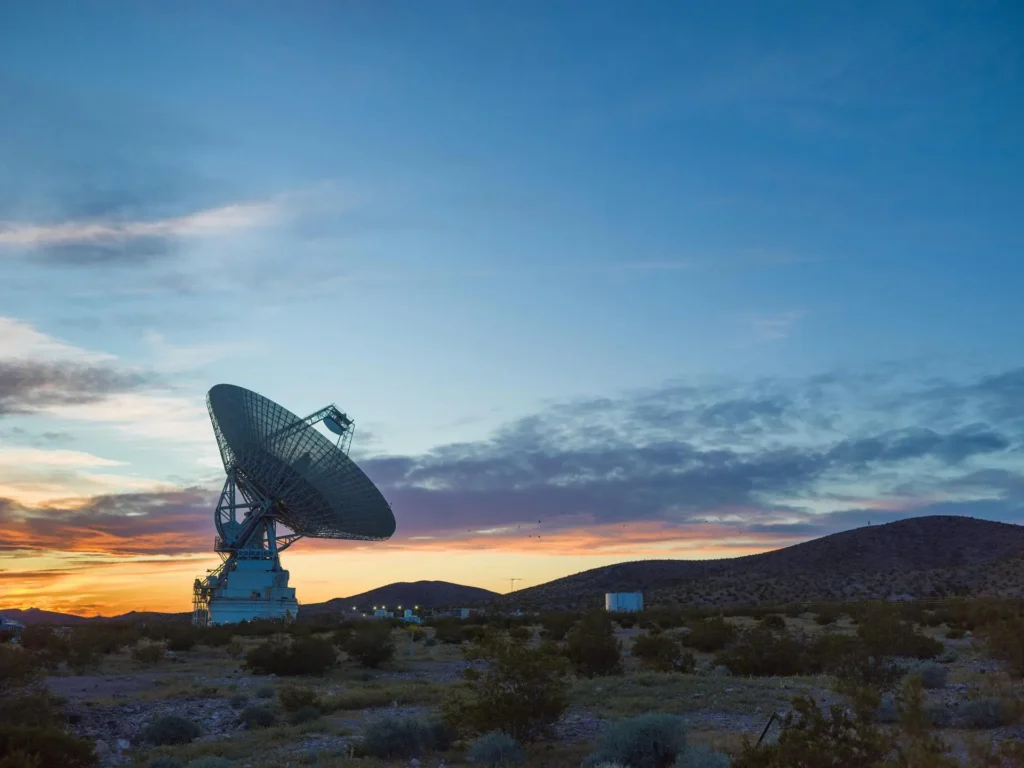
NASA talks to Voyager through the Deep Space Network, giant antennas in California, Spain and Australia spaced so that one of them can always see a distant spacecraft as Earth turns.
Since contact resumed, engineers have been working out what happened. So far, NASA says, they know that one group of thrusters went offline and a backup set switched on. Voyager is programmed to make that swap by itself if its computers sense trouble with the active thrusters. This automatic response, called fault protection, puts the spacecraft into a safe, stable configuration and pauses normal operations so engineers can diagnose the problem.
What caused the loss of contact is still under investigation; as of Nov. 11, NASA had not announced a cause. “This is the first time we’ve seen the spacecraft do something like this, but we are also at a point in the mission where we have to expect the unexpected,” mission manager Kareem Badaruddin said in NASA’s Oct. 29 update.
A Power Supply That Shrinks Every Year
Too far from the Sun for solar panels, the spacecraft runs on radioisotope thermoelectric generators, which turn the heat of decaying plutonium directly into electricity. It’s the same heat-to-power effect that researchers are still refining in new thermoelectric materials. At launch, NASA says, Voyager 1’s three generators produced about 158 watts each.
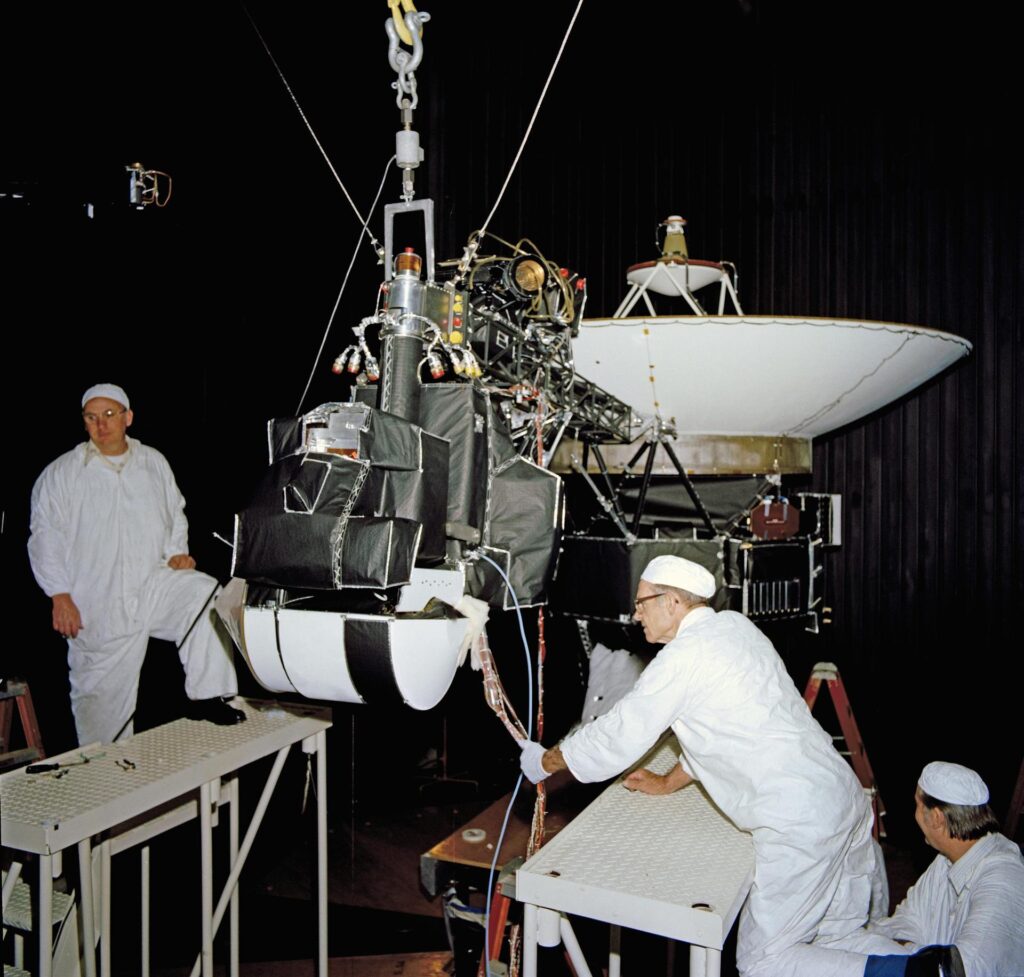
But plutonium runs down. Both Voyagers lose about 4 watts of power every year, and after almost half a century, their power margins have grown thin. Engineers have switched off heaters and other nonessential systems one by one, while making sure the spacecraft never get so cold that their fuel lines freeze.
Science has paid a price, too. Voyager 1 launched with 10 instruments, and some were turned off after its planetary flybys. The power crunch has since claimed two more: the cosmic ray subsystem in February 2025 and the low-energy charged particles experiment in April 2026, which had run almost without interruption since 1977.
In March 2025, project manager Suzanne Dodd spelled out the alternative: “If we don’t turn off an instrument on each Voyager now, they would probably have only a few more months of power before we would need to declare end of mission.”
Two science instruments remain: a plasma wave detector and a magnetometer. On the shut-down particle instrument, the team even left a half-watt motor running, in case spare power ever lets them switch it back on.
The “Big Bang” That Bought Time
In early September, engineers finished something bolder: a months-long effort nicknamed the “Big Bang.” They switched off three devices on the spacecraft and replaced them with three lower-power alternatives, all at the same time.
Doing it simultaneously was the whole point. The devices help keep Voyager warm enough to operate in the frigid dark. Only by swapping all three at once could the team cut power use and still keep heat properly distributed.
The team tried it first on Voyager 2, the safer test subject: closer to Earth, with a little more power to spare. The Voyager 1 swap followed about six weeks later, and it worked. NASA says the Big Bang will let the remaining instruments run longer than expected. Without it, the team would have had to turn off another instrument as early as summer 2027.
A Spacecraft That Keeps Coming Back
October was not the first time Voyager 1 seemed to slip away. On Nov. 14, 2023, it stopped sending readable science and engineering data, though it was still receiving commands. Engineers traced the trouble to a single failed memory chip in the flight data subsystem, the onboard computer that packages data before it is sent to Earth. Part of that computer’s software had been lost with the chip.
Nobody could repair a chip 15 billion miles away. So the team split the affected code into sections, stored them in different parts of the memory and updated every reference so the pieces would still work together. They sent the first piece on April 18, 2024.
The answer arrived early on Saturday, April 20. Just after 6:40 a.m., a cheer went up in a JPL conference room: for the first time in five months, the spacecraft was sending back usable data about its own health. By June, all four instruments operating at the time were returning science again.

The thrusters were next. Voyager 1’s primary roll thrusters had been out of action since 2004, when two small heaters lost power. With the backup set’s fuel tubes clogging, engineers suspected a glitch had flipped a heater switch and set out to flip it back. The risk: if the dormant thrusters fired while their heaters were still off, it could trigger a small explosion.
On March 20, 2025, the team watched the commands play out, and within 20 minutes the heater temperatures rose sharply. “These thrusters were considered dead,” propulsion lead Todd Barber said afterward. One engineer’s insight turned that around, producing what Barber called “yet another miracle save for Voyager.” Whether any of that history relates to October’s thruster switch, NASA hasn’t said.
What One Light-Day Means for Voyager 1
Despite the name, a light-day measures distance: how far light travels in 24 hours. NASA puts it at 16,094,799,096 miles, or about 25.9 billion kilometers.
For scale, light from the Moon reaches Earth in about 1.3 seconds, and sunlight takes about 8 minutes and 20 seconds. Proxima Centauri, the nearest star beyond the Sun, sits about 4.24 light-years out, or roughly 1,550 light-days.
The delay has been creeping up for years. In April 2024, a command took about 22½ hours to reach the spacecraft. By early 2025, it took more than 23. On Nov. 18, it will take a full day, and the reply will need another. Dodd put it this way in NASA’s Oct. 29 update:
“If you want to say ‘hello’ to Voyager, you send your message and then you go home and you wait two days before you finally get a response.”
During the 2025 thruster fix, everything the team saw had actually happened almost a day earlier. Had the test failed, Voyager might already have been in danger before anyone on Earth knew.
The last time the spacecraft looked back, on Feb. 14, 1990, Earth was already a speck. From about 3.7 billion miles away, our planet filled less than a single pixel in the frame that became known as the Pale Blue Dot. Thirty-four minutes later, the cameras were switched off for good. Voyager 1 is now more than four times as far from home.

How Long Can It Keep Talking?
Nobody knows exactly. In 2025, NASA said engineers believed the twins could keep at least one science instrument running into the 2030s, while warning that unforeseen problems could shorten that timeline. The Big Bang should buy extra time, but October’s silence showed how quickly things can change. Voyager 2, which took a different path to visit Uranus and Neptune, is on pace to reach its own one-light-day mark in November 2035.
On board, Nov. 18 will be an ordinary day; NASA says the spacecraft won’t detect any change in its surroundings. The milestone is about scale: how far a machine built in the 1970s has traveled, and how much of space still lies beyond it.
NASA is inviting people to mark the moment anyway. After sunset on Tuesday, Nov. 17, its Shine Bright for Voyager’s Light-Day campaign asks anyone with a flashlight or phone to flash V-G-R, Voyager’s call sign, in Morse code. On Nov. 19, JPL will host a public discussion with the mission team. The Golden Record aboard the spacecraft carries a Morse code message of its own: “Ad astra per aspera,” Latin for “through struggle to the stars.”
Long after its last signal fades, Voyager 1 will keep coasting toward a star called Gliese 445, passing within about 1.7 light-years of it in roughly 40,000 years. At 38,000 mph, it would need about 48 more years just to put a second light-day behind it. And when it crosses the first one on Nov. 18, no one on Earth will see it happen live. Like every signal from Voyager, word of it will take a day to get home.
Sources:
- NASA’s Voyager 1 Conserves Power, Resolves Brief Communications Pause
- NASA Invites Media, Public to Join Voyager 1 One-Light Day Activities
- Voyager 1: What Is a Light-Day?
- Shine Bright for Voyager’s Light-Day
- NASA Shuts Off Instrument on Voyager 1 to Keep Spacecraft Operating
- NASA Turns Off 2 Voyager Science Instruments to Extend Mission
- NASA’s Voyager 1 Revives Backup Thrusters Before Command Pause
- NASA’s Voyager 1 Resumes Sending Engineering Updates to Earth
- Voyager 1 mission overview
- Voyager 1’s Pale Blue Dot