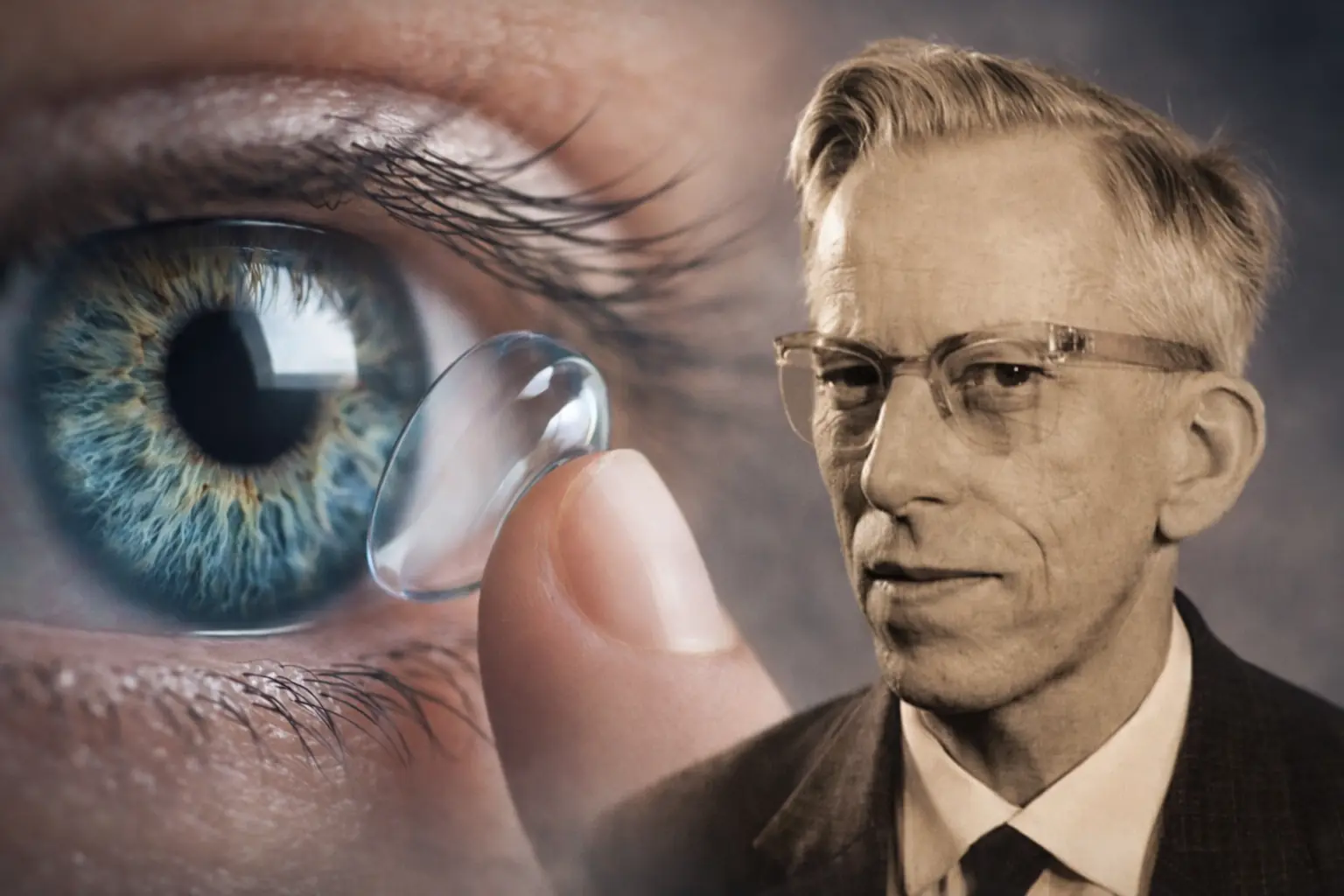
Otto Wichterle Contact Lenses: The Inventor Who Changed Vision but Died Without Fortune
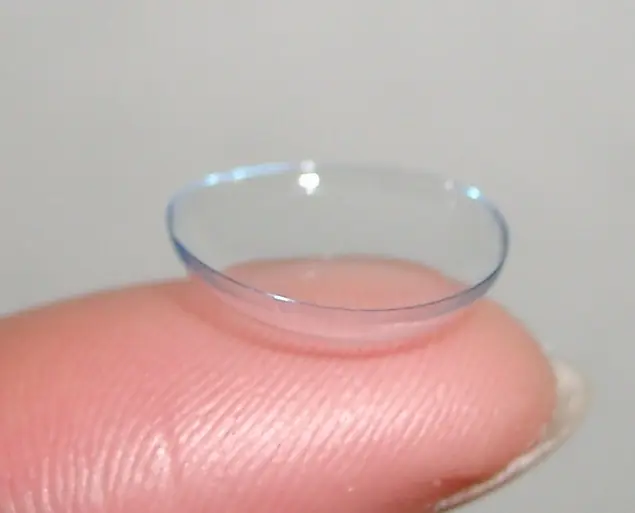
Soft gel contact lenses are without exaggeration an invention that fundamentally changed the world. They were first developed in 1961, and today hundreds of millions of people put them on every single day in situations where they do not want to wear glasses.
The story behind the invention of contact lenses becomes even more fascinating when we look at how differently the invention itself and its creator ultimately fared. While the American company that purchased the license to manufacture the lenses became extraordinarily wealthy, the Czech inventor Otto Wichterle received very little in return. Almost a symbolic reward.
Table of Contents
Early Life of the Scientist Behind Contact Lenses
Otto Wichterle was born in October 1913 into a well off family in the town of Prostějov. His mother came from the family of a regional politician, and his father owned a successful engineering company. His childhood, however, was marked by a serious accident. At the age of six, he fell into a pit filled with waste liquid and nearly drowned. Doctors told his parents that if he survived at all, he would likely suffer severe lifelong consequences. Fortunately, they were wrong.
Wichterle not only made a full recovery, but grew into an exceptionally gifted student. He completed both secondary school and university with top results and in 1935 earned a doctorate in technical sciences at the Institute of Chemical Technology in Prague.
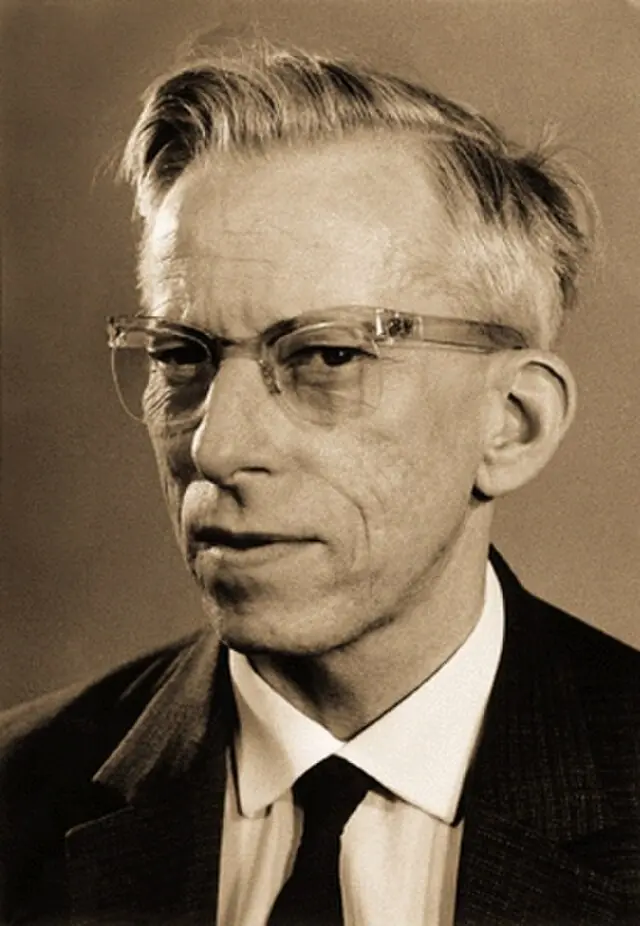
Shortly afterward, he continued studying chemistry at the medical faculty. His promising scientific career was soon disrupted by political events. The rise of Adolf Hitler and the Nazi occupation of Czechoslovakia profoundly affected an entire generation. After Czech universities were shut down in 1939, the twenty six year old Wichterle left academia and began working at the research institute of the Baťa industrial group in Zlín. It was there that he achieved his first major scientific success. In 1941, together with his colleagues, he helped develop polyamide, a new synthetic fiber later known as nylon.
It was almost by pure chance that the already respected chemist became interested in contact lenses. While traveling by train from Olomouc to Prague, he came across an article about surgical eye implants. At that moment, he realized that the ideal material for such use could be a special type of synthetic substance. At the time, lenses were made primarily from plexiglass, which did not allow for long term wear. Before that, lenses were even made from glass. Doctors were searching for a solution that patients could tolerate for hours without pain or irritation.
The Accidental Discovery That Made Contact Lenses Possible
After returning to Prague, Wichterle shared his idea with a young assistant, chemist Drahoslav Lím. Lím immersed himself fully in the research. The work lasted three years. He knew exactly what he was looking for. A transparent material that could retain water and remain biologically compatible with the human body. Something that would behave neutrally when in contact with living tissue. The research was long and filled with dead ends until, in 1955, a fortunate accident occurred, similar to the one behind the discovery of penicillin.
One day, Lím failed to complete an experiment and left a chemical mixture standing in a test tube overnight. When he returned the next morning, he found that it had transformed into a soft, transparent substance. A hydrogel with exactly the properties they had been seeking. The foundation of soft contact lenses had been created. Wichterle and Lím patented the discovery on April 21 of that same year.
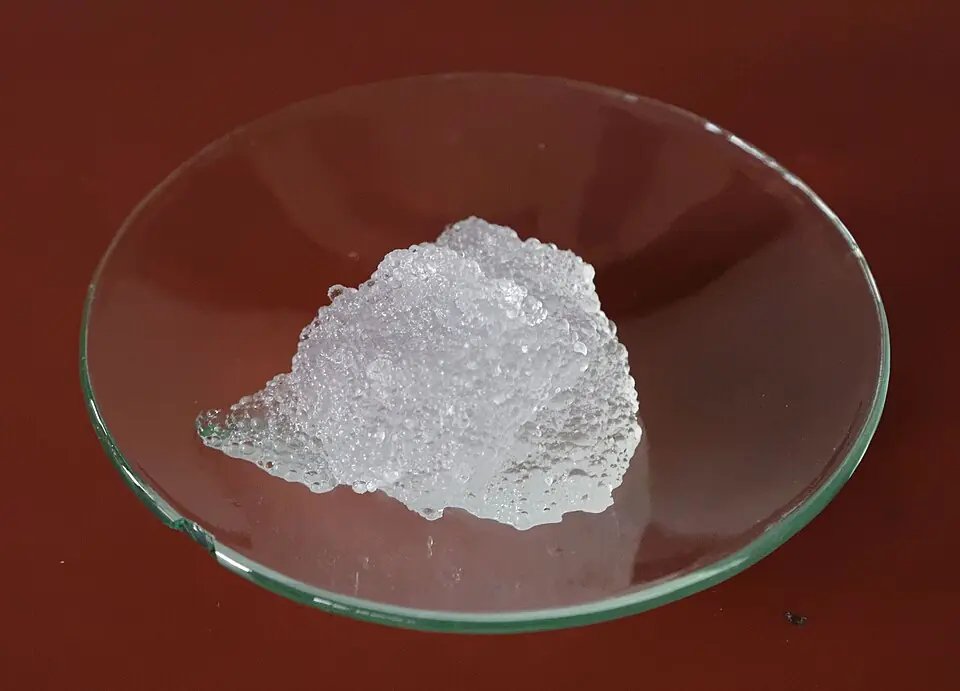
The problems were far from over. The next challenge was shaping the lenses themselves. Although several pairs were produced, their edges were too rough and irritated the eyes. Time passed and the patience of authorities ran out. At the beginning of 1961, the Ministry of Health decided to terminate further research.
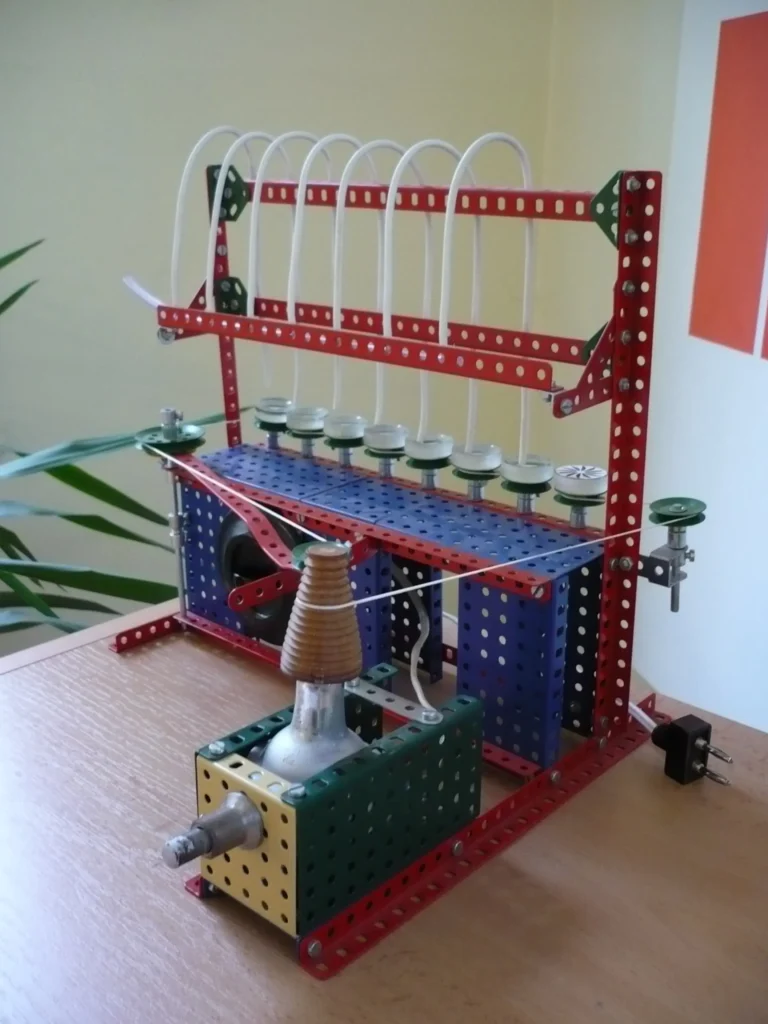
Wichterle refused to accept that decision. He continued working at home in an improvised laboratory set up in the bathroom of his Prague apartment. It was there, during the Christmas holidays, that he finally broke the long chain of failures. Using a children’s Merkur construction set, he assembled a simple molding device. As a power source, he used a bicycle dynamo taken from his sons’ bike, connected to a doorbell transformer. The transformer functioned as a motor with extremely precise rotation speed. On Christmas Eve afternoon, he put the device into operation and cast the first four soft contact lenses.
From Czech Invention to a Global Contact Lenses Industry
Several years later, in 1965, the American company National Patent Development Corporation purchased the license to manufacture and sell the lenses. Its partner later became the medical company Bausch and Lomb, which remains one of the world’s leading contact lens producers today. When US authorities approved the lenses for the American market in March 1971, the company’s stock value increased by 250 million dollars overnight. The company would go on to earn billions from the sale of contact lenses.
The original licensing agreement guaranteed Czechoslovakia regular annual income in the millions of dollars. Reality, however, turned out very differently. Many companies began copying the lenses illegally, prompting the license holders to file lawsuits. As the patent owner, Czechoslovakia was expected to join these legal actions, but lawyers were expensive and court proceedings lengthy. The regime feared that the money invested in legal battles might never be recovered. Without Wichterle’s knowledge, the government sold all patents to the American company for a fraction of their true value while the lawsuits were still ongoing.
This decision proved disastrous. The American license holders ultimately won the court cases and collected tens of millions of dollars in compensation. Czechoslovakia received nothing.
The personal fate of Otto Wichterle was no more encouraging. He supported reform efforts in the country, something the socialist regime could not forgive. As a result, he was removed from his leadership position at the Institute of Macromolecular Chemistry, banned from traveling abroad, and a law was introduced that reduced inventors’ patent income by ninety percent.
A Legacy Behind Every Pair of Contact Lenses
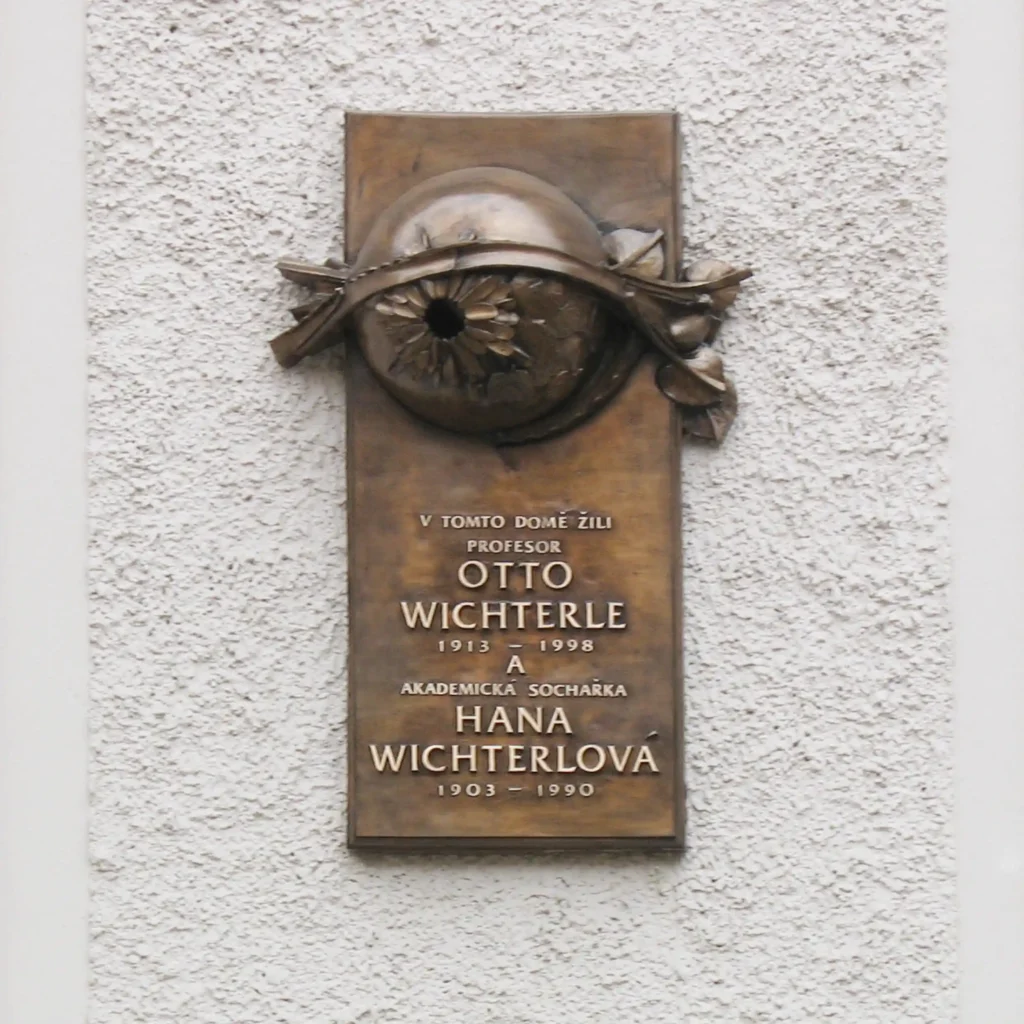
In another country, Wichterle would have become a millionaire. In socialist Czechoslovakia, he could consider himself fortunate simply to continue working in his field. He received broader recognition only after the fall of communism in 1989 and later became president of the Czechoslovak Academy of Sciences. Otto Wichterle died at the age of eighty four. During his lifetime, he held more than 180 patents registered in Czechoslovakia, the United States, and other countries. The companies built on his work continue to sell millions of contact lenses every year.
When people put on contact lenses today, they rarely give it any thought. It is a routine movement, a natural part of everyday life. Yet behind this simple act stands the story of a man who worked quietly, often without support and without certainty that his efforts would ever be properly rewarded. Perhaps the next time someone puts in their contact lenses, it would be worth remembering the man whose idea changed the world, even though it gave him far less than he deserved.
If you enjoy real stories where science, human fate, and unexpected truths collide, you can read another fascinating case here
Sources: