Lascaux Cave Discovery: How a Teenager Accidentally Found Prehistoric Art
Lascaux Cave: How an Ordinary Game With a Dog Revealed One of the Greatest Works of Prehistoric Art
The Lascaux Cave discovery began on September 12, 1940, during what seemed like a calm autumn day in southwestern France. Marcel Ravidat, an 18 year old boy from Montignac, went for a walk as he usually did with his dog Robot. The dog suddenly disappeared near a fallen tree, and Marcel followed him to a small hole in the ground. What was hidden there was more than just an animal shelter. It was the entrance to a vast cave covered in prehistoric paintings.
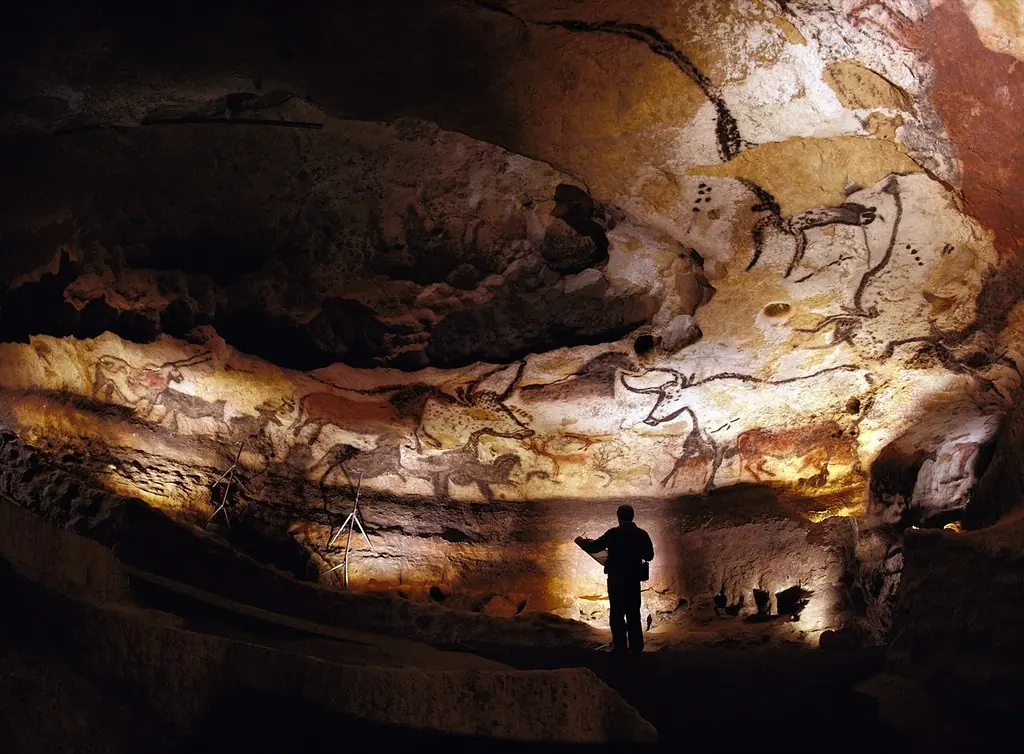
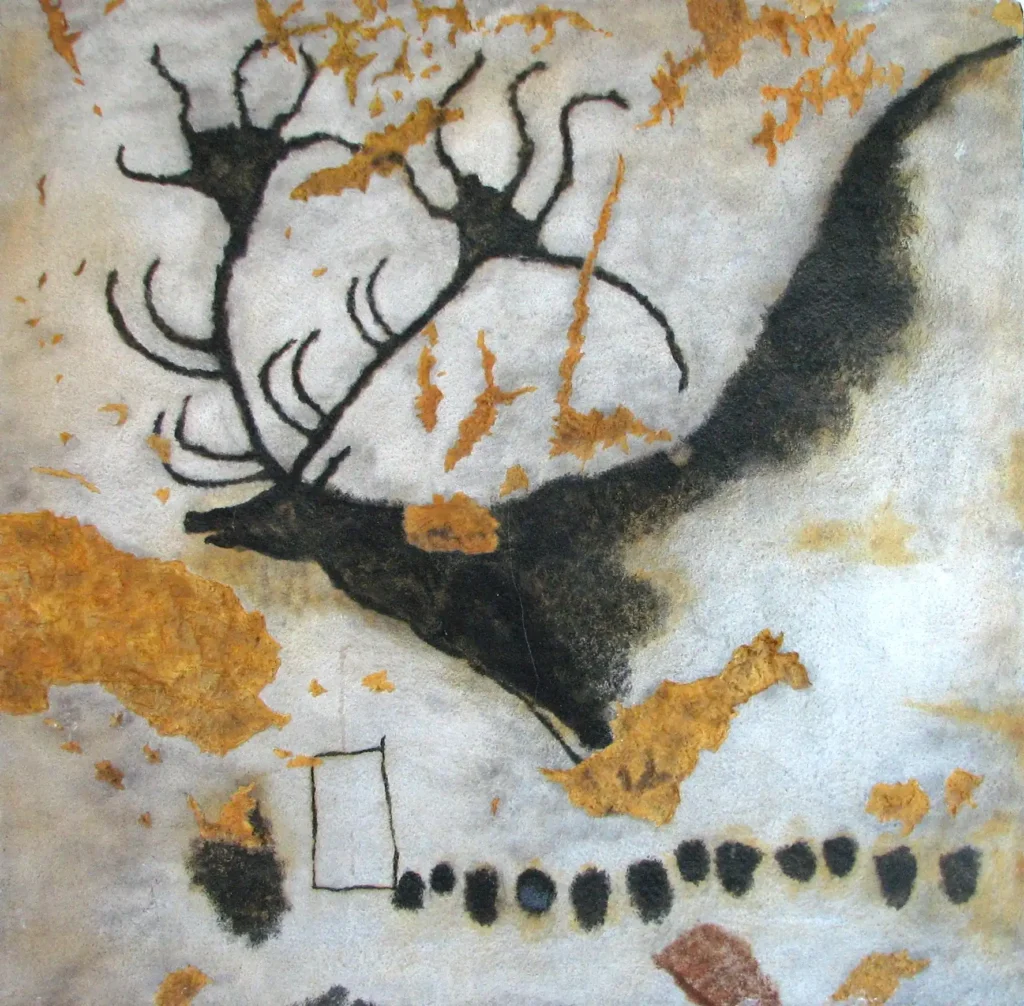
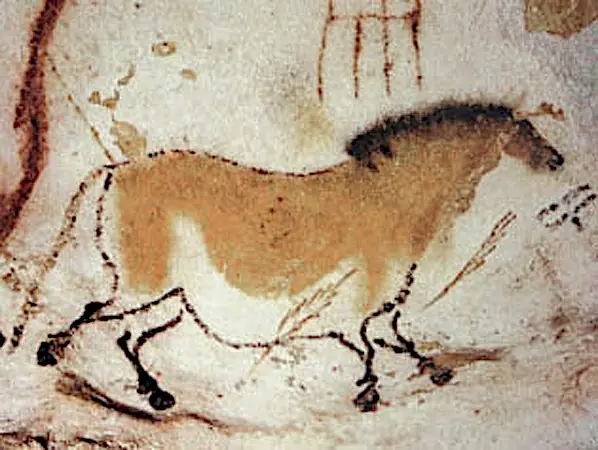
When he returned with his friends Jacques Marsal, Georges Agnel, and Simon Coencas, they discovered something completely unexpected inside the dark passage. In the light of their lamps, dozens of painted animals appeared on the cave walls. Bison, horses, and deer were depicted alongside mysterious abstract symbols. This was not just a discovery. It was an entirely new window into the world of our distant ancestors.
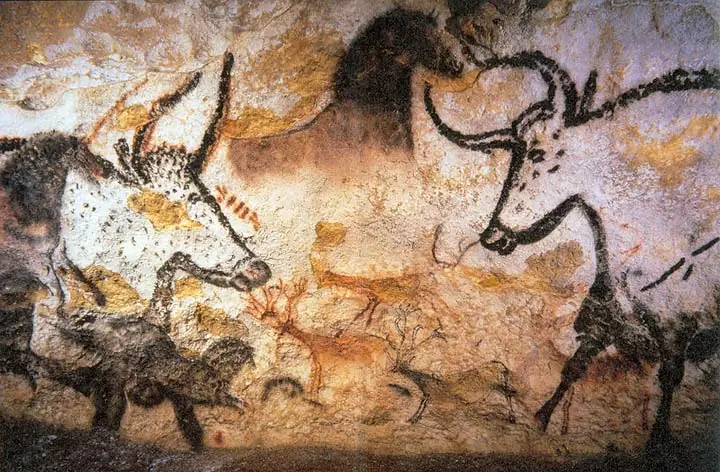
Table of Contents
An unexpected Lascaux Cave discovery full of stories
At first, the boys believed they had found nothing more than an underground tunnel leading to an old structure or a hidden shelter. But after lowering a rope down a fifteen meter vertical shaft and entering the cave, they realized they were standing in front of something humanity had never seen before.
A few days later, on September 21, 1940, experts joined them at the site, including the well known French prehistorian Henri Breuil. He created the first detailed sketches of the cave, which later became crucial research material as the original paintings gradually began to deteriorate over time.
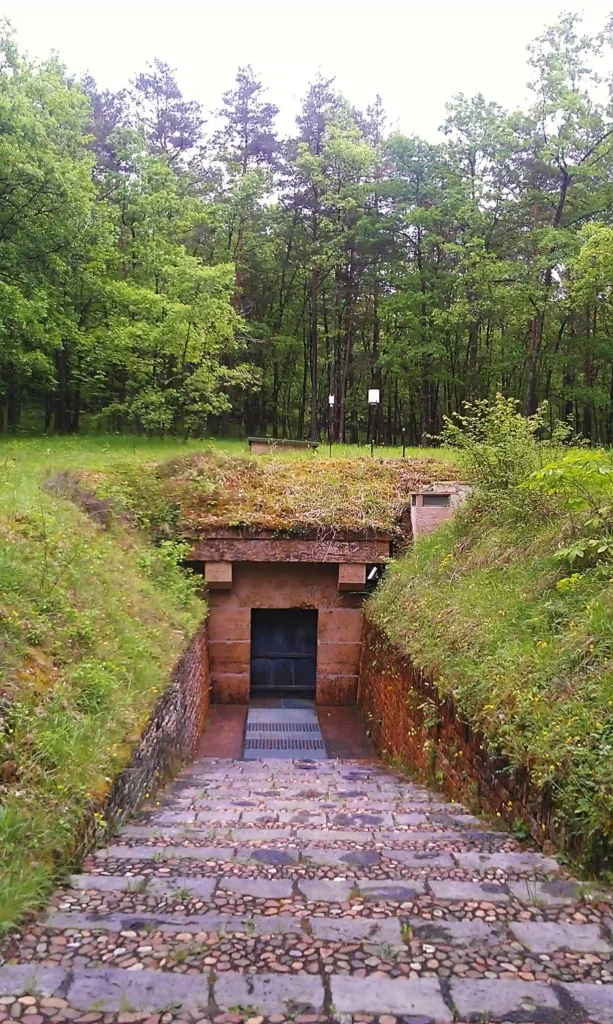
The cave they discovered was named Lascaux. It is located near the village of Montignac in the Dordogne region of France. Inside are more than six hundred wall paintings and thousands of engravings depicting animals, symbols, and scenes from prehistoric life. These artworks are estimated to be between seventeen thousand and twenty two thousand years old. They come from the later period of the Paleolithic era and are considered one of the most important examples of prehistoric art ever found.
Discovery during wartime
The discovery of Lascaux took place during an extremely tense period. France was in the middle of World War Two, and although southwestern France was not heavily bombed, it lived under the shadow of German occupation. Thanks to the remote location of the Dordogne region, the cave initially remained outside the attention of military forces, which likely helped it survive without damage.
Marcel Ravidat quickly understood that this was no ordinary find. After the first professional examinations, he became one of the earliest guardians of the cave and helped protect it from vandals and curious visitors. During the war years, access to the cave was limited and information about it spread cautiously. As a result, the unique paintings remained almost untouched until the post war period.
Growing fame and the beginning of problems
After World War Two ended, the site was opened to the public. In 1948, Lascaux Cave welcomed visitors from around the world who came to admire its ancient paintings. However, it soon became clear that human presence did not benefit artwork that had survived underground for thousands of years.
What was meant to be admiration slowly became a threat to preservation. Large numbers of visitors gradually disrupted the cave’s natural microclimate. Carbon dioxide from human breath, body heat, humidity, and artificial light led to the growth of lichens, algae, and mold, which began damaging the delicate pigments on the walls. The situation worsened to the point that in 1963 the cave was completely closed to the public in order to preserve its integrity.
Protection, replicas, and legacy
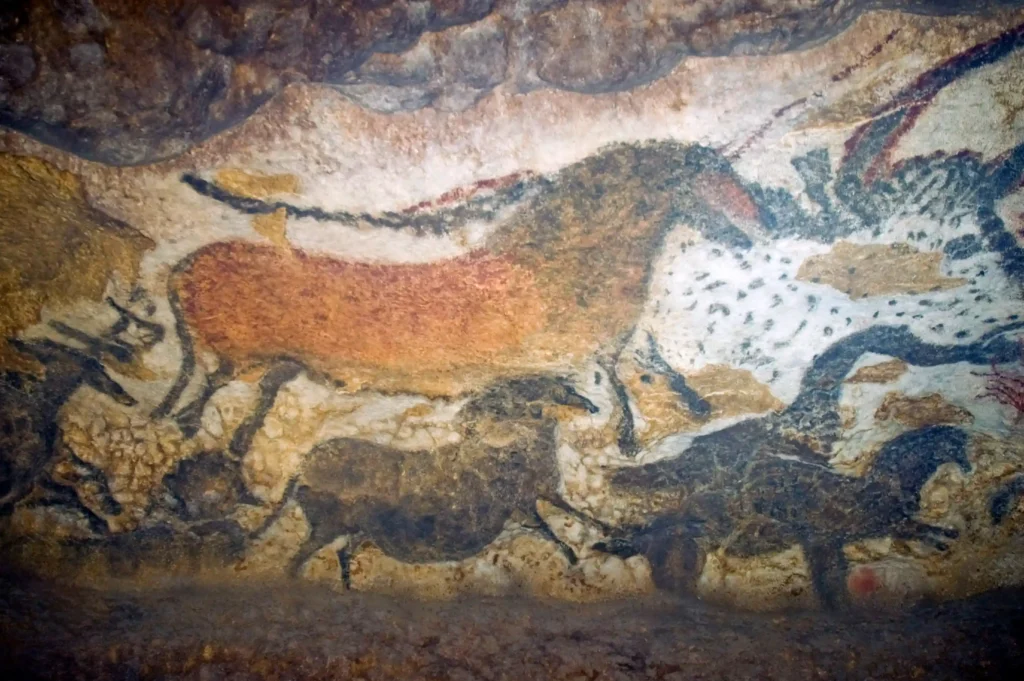
After the original cave was closed, experts and cultural heritage specialists searched for ways to protect the paintings while still allowing public access. In the 1980s, the first accurate replica known as Lascaux Two was created, displaying key sections such as the famous Hall of the Bulls away from the original site. Additional faithful replicas followed, and in 2016 Lascaux Four opened as a modern center for parietal art. It allows visitors to experience the atmosphere of the cave without putting the original paintings at risk.
Archaeological significance today
The discovery of Lascaux completely changed our understanding of prehistoric humans. It showed that art and symbolic thinking were not simple expressions but an essential part of life more than twenty thousand years ago. The paintings prove that prehistoric people mastered advanced techniques, used natural pigments, and treated different parts of the cave as spaces for storytelling or ritual activity.
Lascaux also inspired further discoveries around the world and remains one of the most famous examples of prehistoric art. Its story is a powerful reminder of how curiosity and chance can lead to discoveries that reshape our understanding of human history.
What do you think? Should Lascaux Cave have remained open to the public, or was closing it the only way to protect it? And would you like to visit one of its replicas someday?
If stories like the Lascaux Cave discovery fascinate you, there are many more remarkable finds waiting to be explored. You can read more about astonishing Ice Age discoveries and prehistoric animals preserved in near perfect condition in these articles: prehistoric animals frozen intime 1 and continue in part 2
Sources:
Featured image by: Bayes Ahmed, licensed under CC BY 2.0